



Central European Time

Malka Ceh on Facebook
Malka Ceh on Instagram
Malka Ceh on LinkedIn

Tag: Identity

  • Sex, Gender, and the Making of a Self

    Sex, Gender, and the Making of a Self

    “Boy or girl?” is most often among the first questions asked about a person. The answer may precede your name. It precedes your earliest memory, and every thought you eventually form about yourself. Other people read your body, choose your pronouns, and begin to imagine who you will be long before they get to meet your personality. This first inherited account of yourself may be given so surely that it forgets to be examined. In reality, it may only partly fit, change its meaning over time, and leave many experiences unnamed. What may appear to be a simple fact paints a much larger portrait: the body you have, the place you occupy among others, and the person you recognize yourself to be.

    Sex and gender gather several different things under one name. Chromosomes, gonads, hormones, anatomy, social expectations, and personal experience. All these contribute to your self in different ways and at different times. To understand how they become part of identity, we will separate these strands and follow each from its beginnings.

    Let’s recall the basics: sex and gender

    Sex refers to a constellation of biological characteristics, including chromosomes, sex-determining genes, gonads, hormones, internal reproductive organs, external genitalia, and the secondary sex characteristics that emerge at puberty. Assigned sex is the category recorded at birth, usually according to the appearance of the external genitalia.

    Gender emerges from the social and personal world that develops around sex. It includes the meanings a culture gives to being a woman, a man, or another gender; the ways you express yourself; and your own experience of who you are. Gender identity, gender expression, and sexual orientation describe different aspects of your self, although they may become closely associated in your life.

    Sex is multidimensional, since a person’s chromosomes, gonads, hormones, and anatomy do not invariably convey identical information. Most people develop through one of two common pathways, and the different dimensions of sex correspond closely. However, variations occur at every stage.

    The first strand: chromosomes at conception

    At the beginning, before names, expectations, or nursery colors, you were a cell. The cell carried chromosomes inherited from your two parents. Most commonly, an embryo receives either two X chromosomes, usually written as 46,XX, or one X and one Y, written as 46,XY. These combinations establish fundamental conditions for the development that follows:

    • The Y chromosome usually carries a gene called SRY, which contributes to the activation of the genetic network involved in testicular development. Its presence alone, however, does not determine every subsequent sex characteristic. Other genes must respond, gonads must develop, hormones must be produced, and the body must be capable of responding to them.
    • Variations sometimes occur during the formation of egg or sperm cells or during early cell division. A person may have a single X chromosome, as in 45,X; an additional X, as in 47,XXY; or an additional Y, as in 47,XYY. Mosaic patterns are also possible, which means that different cells within the same body carry different chromosomal combinations.

    These variations usually arise by chance, beyond either parent’s control. Their effects differ considerably. Some become apparent early, some affect puberty or fertility, and some remain undiscovered unless chromosome testing is performed for another reason.

    So, chromosomes begin the sequence. The body that will eventually be seen, named, and interpreted, develops through several further stages.

    Taking the human shape: early sexual development

    Until approximately the sixth week of embryonic development, the gonads remain bipotential: they have the capacity to develop along an ovarian or testicular pathway. A coordinated network of genes gradually carries development in one direction. SRY commonly participates in activating the testicular pathway, while another set of genes supports ovarian development.

    When testes develop, they begin to produce anti-Müllerian hormone and testosterone. Anti-Müllerian hormone influences the internal reproductive tract, while testosterone and its more potent derivative, dihydrotestosterone, contribute to the development of male-typical internal and external anatomy.

    The penis and clitoris emerge from the same embryonic structure, known as the genital tubercle. The scrotum and labia also develop from shared precursors. Hormone production, timing, conversion, and receptor response all influence the forms these structures eventually take.

    If testis-determining signals are absent or ineffective, ovarian development proceeds through its own active genetic pathway. The internal and external anatomy generally develops along the female-typical course. Sexual differentiation is so a sequence of interacting genetic and hormonal events, never a single instruction contained in one chromosome.

    When development takes another route

    Variation can enter this sequence at several points. A person may have a Y chromosome without a functioning SRY gene. The testes may produce an unusual amount of a hormone, or the body may convert that hormone differently. Hormone receptors may also respond partially or scarcely at all.

    In complete androgen insensitivity syndrome, for example, a person has XY chromosomes and develops testes that produce androgens, while the body’s cells cannot respond to those androgens. The external genitalia consequently develop in a female-typical form. Anti-Müllerian hormone is still produced, so the internal reproductive anatomy differs from that of most people with female-typical external genitalia.

    Development may also vary in an XX fetus exposed to unusually high androgen levels, as can occur in some forms of congenital adrenal hyperplasia. Depending on the timing and degree of exposure, the external genitalia may develop characteristics that do not fall neatly within the most common female or male forms.

    Such characteristics may be described as intersex traits or differences or variations of sex development. Some are visible at birth; others become apparent during puberty, through fertility investigation, or by chance. Their medical significance also varies. Certain conditions require prompt care, while others have little effect on health.

    These variations remind us that assigned sex usually reflects one visible part of a much larger developmental history and a much richer reality.

    Another layer: the developing brain

    Sex-related development also involves the nervous system. Sex chromosomes, genes, and gonadal hormones influence the developing brain before birth and continue to exert effects throughout childhood, puberty, and adulthood. Average sex differences are evident in some aspects of brain structure, function, and behavior, although the distributions overlap extensively and individuals cannot be divided into two uniform types of brains.

    The clearest human evidence for the influence of prenatal androgens concerns certain sex-typed interests and behaviors, particularly childhood play. Girls exposed to unusually high androgen levels before birth, most often studied through congenital adrenal hyperplasia, show increased interest on average in activities culturally associated with boys. These findings concern group tendencies and leave substantial variation among individuals. A review of early androgen exposure and gender development shows the evidence for effects on gender identity itself considerably less direct.

    We see that gender identity develops through a complex relationship among biological, cognitive, relational, and cultural influences. The contribution of each remains difficult to isolate, and no single chromosome, hormone level, childhood preference, or brain feature can reveal an individual’s gender identity. People with similar developmental conditions may arrive at different identities; people who share an identity may have very different biology and developmental histories.

    Biology contributes to the conditions from which a self develops, and never defines the person’s first-person account in advance.

    Puberty: the body becomes newly present

    Puberty brings another period of pronounced hormonal activity. Rising androgen levels in a typical male puberty deepen the voice, promote facial and body hair, and alter muscle and fat distribution. In a typical female puberty, rising estrogen levels contribute to breast development, changes in body shape, and menstruation. Every body produces both androgens and estrogens, although their concentrations and patterns of secretion differ.

    These changes make the body’s sex characteristics more visible and may give them a new personal and social significance. For some people, puberty brings an expected sense of continuity. For others, the developing body feels unfamiliar, unwelcome, or increasingly difficult to reconcile with their sense of themselves.

    Puberty can bring an earlier question into sharper focus, introduce a question that had never arisen before, or pass with little reflection on gender. The meaning of the changes depends upon more than the hormones themselves; it also depends upon the person who encounters them and the social world in which they are interpreted.

    How culture interprets the body

    The social interpretation of sex begins remarkably early. Once a fetus has been described as a girl or a boy, other people may choose names, colors, clothes, toys, and imagined futures accordingly. After birth, differences appear in the language adults use, the behavior they encourage, and the qualities they notice or praise.

    Children gradually learn the gendered meanings of the world around them. They observe who is expected to behave in which way, which possibilities appear available to them, and how departures from those expectations are received. They also participate in this process: they imitate, resist, reinterpret, and search for forms of recognition that make sense to them.

    Culture supplies much of the vocabulary through which gender becomes intelligible. It shapes what femininity, masculinity, and gender variance can mean at a particular place and time. The same body, gesture, preference, or form of dress may carry different meanings in another family, community, or historical period.

    Throughout development, biology and culture remain closely involved. Biological characteristics influence how other people respond to a child, while those responses influence how the child understands the characteristics. Neither process allows us to predict exactly what gender will come to mean to the person.

    Development and social interpretation still leave one dimension unfinished: the meaning these descriptions acquire in your own experience.

    When the description becomes personal

    Other people encounter your sex and gender from the outside. They see a body, hear a name, use a pronoun, and place you within familiar social categories. Your acquaintance with these things follows another course. It includes how you experience your body, which forms of recognition feel natural, how you wish to appear among others, and whether the description you inherited seems to contain you adequately. For some people, these elements remain in such quiet agreement that gender rarely becomes an object of thought, and it belongs to the familiar background of the self. Others experience gender as a distinct and intimate certainty. Still others encounter it as a question whose meaning emerges only gradually.

    The question may first appear through discomfort with a role, an unexpected ease in another form of expression, a private image that returns, or the peculiar intimacy of being addressed differently. You may notice that you feel more recognizable to yourselves in certain clothes, among particular people, or under another name. An apparently minor detail can reveal that a given description is missing something. These experiences do not invariably lead to one immediate conclusion. You may need time to distinguish your relationship with your body from your relationship with gendered expectations, expression, sexuality, belonging, or recognition. These parts can correspond closely or move along different routes.

    Gender incongruence can exist without gender dysphoria, and many people examine their gender without seeking medical treatment. It’s a consequence of the complex interplay of biological, environmental, and cultural factors and does not invariably involve distress or treatment.

    Self-acquaintance can precede any label or decision. It may bring a definite label, reveal a more complicated relationship with existing categories, or make the uncertainty itself more intelligible. And only inquiry about the experience uncovers what it really contains. Developmental science can tell us how bodies take shape and which influences are associated with certain patterns. Social history can tell us how categories and expectations arose. But the significance of those facts in one particular life becomes known only through the person’s experience of them.

    TL;DR

    Sex and gender develop over time through several related layers. Chromosomes establish some of the earliest biological conditions. Networks of genes guide gonadal development; hormones and receptors influence internal and external anatomy; the brain continues developing under genetic, hormonal, and environmental influences. Puberty makes many sex characteristics more pronounced. Culture gives these characteristics social meanings and places you within a field of labels, roles, expectations, and possibilities. Gender identity concerns your own experience within that field. Biology, culture, and personal history all contribute, while no single factor determines precisely who you become.

    The question “boy or girl?” asks for a category that describes something only sometimes useful. But the answer remains of little significance besides the person who grows from it. The category can imperfectly record chromosomes, summarize only the visible anatomy, and establish a social position that leaves much of the self ill-defined. It may sometimes begin, but never finish the portrait. What you are, how you are experienced, questioned, revised, and made your own, unfolds through the continuing acquaintance between your environment, time, and your self.

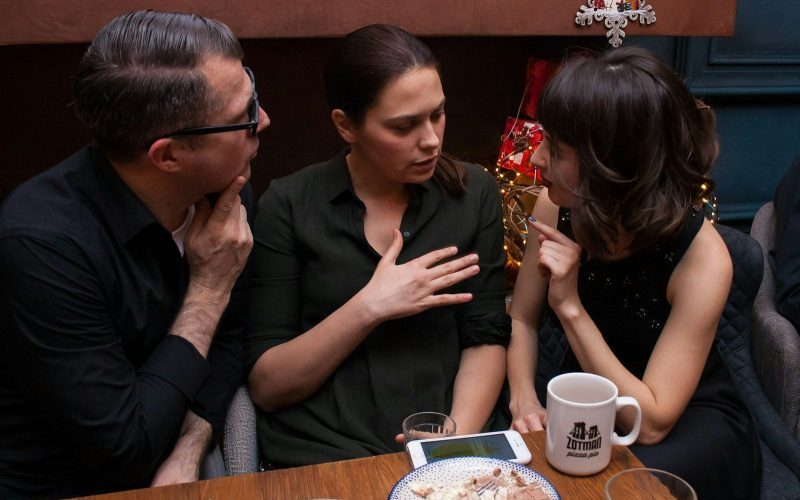
  • Mental Difficulties as a Ready-Made Identities

    Mental Difficulties as a Ready-Made Identities

    Before TikTok began explaining your personality to you, Tumblr had helped make being unwell into an aesthetic. In parts of its 2010s culture, depression, anxiety, and eating disorders acquired a recognizable vocabulary, a visual style, and communities organized around them. You could find people who understood your unhappiness, then gradually come to understand yourself through the unhappiness you shared. A label became an identity signifier. In their account of this history, Gayathiri Rajkumar and J. D. Haltigan describe a “pseudo-normalization” in which mental illness acquired social appeal and recovery could recede from view. Being troubled had become a way of being somebody.

    The vocabulary has since become more adventurous. Today, you can join a “BPD Baddie Club,” giving borderline personality disorder the branding of an exclusive social circle. You can discover that you are a “dark empath,” a research-derived personality label that has acquired an online life considerably more glamorous than its scientific beginnings. The name alone suggests that your relationship difficulties deserve a film adaptation. Then there are videos treating sleeping with “T-rex arms” as evidence of ADHD. Apparently, even your wrists have something to confess. Psychiatric disorders, neurodevelopmental conditions, and nonclinical personality labels end up displayed together, each offering another way to reveal what sort of person you are.

    A sound diagnosis can explain difficulties that have troubled you for years, help you obtain appropriate care, and relieve considerable shame. Finding people with similar experiences can also make life less lonely. Those benefits help explain why the labels carry such force. The glamorization of mental illness as a social identity takes that appeal further: a condition becomes a recognizable persona, complete with a manner of speaking, an account of your past, and a community prepared to recognize you on sight.

    You can see the attraction, especially if your answer to “who are you” has become a little uncertain. A ready-made identity supplies an explanation for your feelings, a vocabulary for your difficulties, and people who share your experience and offer additional insight about it. You can introduce yourself with a few letters and feel that something substantial has been communicated. Much of the interpretive work appears to have been done for you. You belong somewhere, your experience makes sense, and your peculiarities have acquired the reassurance of a category. That is quite a lot to get from a label.

    Working out who you are through the particulars of your own life is a painfully slower business. You have to examine what you want, what you value, which loyalties you inherited, what you resent, and why you keep making certain choices. The answers interfere with one another. You may value independence and arrange your life around being needed; enjoy solitude and feel wounded when people leave you alone; pursue an ambition whose achievement would oblige you to abandon something else you love. A useful understanding of yourself has to accommodate all of this. A tidy description is considerably easier to manage.

    Social media is exceptionally good at providing these tidy descriptions. A creator lists a handful of familiar experiences, gives them a clinical name, and invites you to recognize yourself. The distinction between describing one person’s experience and making a claim about everyone with a condition can disappear in seconds. A 2025 study of popular ADHD TikToks collected in 2023 found that fewer than half of the symptom claims matched DSM criteria; acknowledgments that the experiences could occur in people without ADHD were rare. Most creators who stated a credential cited lived experience, and half of the creators were selling something or otherwise seeking financial support. Expertise was optional. An audience offered rather more tangible advantages.

    The invitation is seductive because recognition feels like understanding. You see a description that resembles you and experience the pleasure of being explained. Yet a resemblance leaves plenty to investigate: how often something happens, under what circumstances, how much it affects your life, and what else might account for it. A video can offer a useful starting point. The trouble begins when the starting point becomes your finished account of yourself, and every subsequent experience is recruited to confirm it.

    Once other people recognize you through that account, the attachment can become social as well as personal. Clinicians Jane Harness and Hayley Getzen called attention to a “sick-role subculture” on TikTok. The phrase captures an uncomfortable possibility: illness can become a role through which you gain membership, attention, and social capital. A disorder identity can make you distinctive enough to be interesting and familiar enough to belong. That combination has always had a market.

    Such performative mental illness carries many risks. An audience can shape sincere distress. If certain accounts of your experience receive recognition, you may learn to emphasize them, repeat them, and notice more of the experiences. Rajkumar and Haltigan propose that these incentives can also encourage exaggerated symptom presentations. Social rewards shape behavior. Being recognizable to your community can start to govern how you describe yourself, until the performance helps decide which parts of you receive attention, including your own. You can become quite practiced at being the person everyone has agreed you are.

    My concern is the narrowing that can follow. If you organize your identity around a disorder, the features that fit it can become disproportionately important, while your other interests, capacities, conflicts, and possibilities receive less consideration. You may begin to treat a difficulty as a permanent statement about what you can do. An improvement can even become socially awkward if your friendships and your place in a community depend heavily on a shared account of being unwell. You have acquired an explanation, and now you have reasons to preserve it.

    What you lose in this arrangement is your individuality. You set out to explain what makes you particular and end up describing yourself in language shared by thousands of strangers. Even an accurate diagnosis leaves most of your personhood unexplained. It says little about why a particular compliment embarrasses you, why success sometimes disappoints you, what you hope another person will notice, or which desires you can admit to yourself. These details matter because they concern the way you actually live. They are also considerably harder to put in a bio.

    Developing an identity of your own requires sustained acquaintance with those details. You begin with plenty of material: your temperament, history, relationships, culture, and the roles you have already learned to occupy. The work involves understanding what you have inherited, discovering what you have overlooked, and deciding what you want to continue. Your account of yourself changes as you learn. You can become clearer about what matters to you while remaining capable of surprise, contradiction, and revision. That flexibility gives your identity room to develop with your life.

    This is the kind of exploration we undertake in psychoanalytic conversations. We begin with your experience and follow its particularities: a reaction that puzzles you, a recurring wish, an association, an incident you keep returning to. I bring psychological knowledge, questions, and interpretations; together, we examine how the details connect and what those connections might mean. If you describe yourself as someone who always avoids conflict, for instance, we can look at the conflicts you avoid, the people involved, what you expect would happen if you spoke, and the occasions when you are quite capable of arguing. The familiar description starts to acquire some useful complications.

    I use psychoanalysis outside the clinical framework for this work of self-knowledge; clinical care has its own place whenever it is needed. In our conversations, you have time to develop an understanding of yourself that can hold more of your experience, including the parts that make your preferred explanation inconvenient. You participate in forming an identity you can understand, question, and revise. It takes longer than recognizing yourself in a video. You do, however, get to have a say in who you become.

  • Childfree, Apparently a Cause for Concern

    Childfree, Apparently a Cause for Concern

    Tell someone you don’t want children and you may accidentally have requested a psychological assessment. Perhaps you’re afraid of responsibility. Perhaps your childhood needs investigating. Perhaps you haven’t met the right person, whose reproductive enthusiasm will apparently overwrite your personality. Somewhere in this conversation, someone who has known you for eleven minutes becomes very confident about what will make you happy at sixty. You were discussing your plans for the weekend and suddenly they are supervising your life.

    Underneath these exchanges sits the persistent assumption that wanting children is self-explanatory and not wanting them requires an explanation, preferably one that reveals something wrong with you. You might even get gaslit into wanting to know what research on childfree adults has to say about it. Do people who don’t want children differ psychologically from people who do? Are we looking at a distinctive personality, a different set of priorities, or a collection of perfectly ordinary people whose reproductive decisions have upset the seating plan? The findings give considerably less reason for concern than the unsolicited advice would suggest.

    First, Are We Even Studying the Same People?

    Before getting into them, though, we need to distinguish people who don’t want children from people who wanted them and couldn’t have them. Both may appear under “no children” on a questionnaire, but that shared answer tells us very little about their experience. Someone grieving a hoped-for family and someone delighted never to attend a school parents’ evening are not describing the same life. Research that combines them can blur precisely the difference we need to understand: whether someone’s circumstances correspond to what they wanted. The literature repeatedly identifies this distinction as essential to interpreting findings about well-being [1,2].

    Once we make that distinction, the fantastic story of the secretly miserable childfree adult becomes harder to sustain. Studies find no meaningful differences in life satisfaction between childfree adults and parents, or other groups of nonparents [3]. Treating eventual misery as the predictable consequence of declining parenthood is far of, just like establishing that childfree people are happier, wiser, or better at being alive. You can be thoroughly pleased about not having children and thoroughly displeased with your job, your relationship, or your own behavior last Monday. A reproductive decision cannot organize the rest of your psychology for you. Equally, a miserable week doesn’t expose your childfree life as a terrible mistake. Parents are generally allowed to have a bad days without someone suggesting that the existence of their children explains it. The same courtesy would be lovely.

    A Personality Type? Hold the Matching Jackets

    Personality findings are more mixed than a neat “childfree personality” profile would suggest. Research shows that childfree respondents score higher on independence and lower on agreeableness and extraversion than parents or people who wanted children [4]. That is interesting, although it leaves the direction of the relationship unresolved: these results don’t show that choosing a childfree life makes you independent, or that independence necessarily leads you away from parenthood. After demographic adjustments, no significant personality differences between childfree adults and parents remain, though; the only difference persisting is the slightly lower agreeableness among childfree adults compared with people planning to become parents. So sadly, however convenient that would be for writing a punchy article, sharing a decision about parenthood does not give us a shared personality. We could nevertheless commission matching jackets for the fiercely independent, gloriously disagreeable childfree population [3].

    Your Decision, Their Moral Outrage

    Where the research does get more revealing is in how people respond to that decision. If you ask people to evaluate a married adult described as having chosen either no children or two children, the childfree adults elicits moral outrage and are judged less fulfilled. This applies to both male and female targets [5]. Notice what is being measured: other people’s judgments about someone’s fulfillment. Nobody needs to establish that these fictional childfree people are spending their evenings weeping into decorative cushions, it’s simply assumed that childfree adults are less fulfilled. The moral outrage is unfounded: disliking someone’s preference is one thing; responding as though they have failed an obligation is another. Research shows that parenthood can function as a moral expectation, making refusal look like a breach of duty. It offers an confirmation of the experience in which your explanation is heard and rejected because you are apparently not entitled to want that.

    Apparently, Your Future Has Already Been Decided

    Then comes the future: You’ll regret it. You’ll be lonely. Who will look after you? Research on regret makes an important distinction between people who chose not to have children and those who wanted them. Voluntarily childless women report greater well-being, more autonomy, and a stronger sense of being able to manage their lives than involuntarily childless women. They were also not likely to report child-related regret [1]. The social setting also matters. A study of 24,195 adults over forty across 24 European countries found that the association between childlessness and poorer psychological well-being varied between countries, particularly among women. The disadvantage was smaller in countries where attitudes toward childlessness were more accepting and social contact was more common [6]. This study examined childlessness broadly, however, so its findings cannot be attributed specifically to childfree people.

    A Final Note: You also Don’t Owe Anyone an Extraordinary Life

    The research gives us little reason to treat a childfree life as inherently less fulfilling. My additional note is that you also shouldn’t have to prove its value by becoming exceptionally accomplished, permanently available to your friends, or impressively useful to society. You can care for people without becoming a parent, but you shouldn’t have to submit a portfolio of alternative caring activities before your decision is accepted. The same goes for enjoyment. You do not owe anyone evidence of a sufficiently fabulous life. If you spend a Saturday doing laundry and watching something mediocre, you have not squandered your freedom. You are allowed an ordinary life, including its less photogenic uses of an afternoon.

    That freedom from having to justify yourself matters in psychoanalysis, too. Your decision about children can be explored, but only with the same neutrality as other consequential choices and zero quiet appointments of parenthood as the correct outcome. You may have mixed feelings about having children, feel pressure from your family, or want to understand how you approach commitment and independence in other parts of your life. Or you may be perfectly fine about not wanting children and prefer to discuss something else. You don’t want children. It would be lovely if that could occasionally be the least interesting thing about you.

    Sources

    [1] Jeffries, S., & Konnert, C. (2002). Regret and psychological well-being among voluntarily and involuntarily childless women and mothers. The International Journal of Aging and Human Development, 54, 89–106. https://doi.org/10.2190/J08N-VBVG-6PXM-0TTN

    [2] Stahnke, B., Cooley, M. E., & Blackstone, A. (2022). A systematic review of life satisfaction experiences among childfree adults. The Family Journal. https://doi.org/10.1177/10664807221104795

    [3] Watling Neal, J., & Neal, Z. P. (2021). Prevalence and characteristics of childfree adults in Michigan (USA). PLOS ONE, 16(6), e0252528. https://doi.org/10.1371/journal.pone.0252528

    [4] Avison, M., & Furnham, A. (2015). Personality and voluntary childlessness. Journal of Population Research, 32, 45–67. https://doi.org/10.1007/s12546-014-9140-6

    [5] Ashburn-Nardo, L. (2017). Parenthood as a moral imperative? Moral outrage and the stigmatization of voluntarily childfree women and men. Sex Roles, 76, 393–401. https://doi.org/10.1007/s11199-016-0606-1

    [6] Huijts, T., Kraaykamp, G., & Subramanian, S. V. (2013). Childlessness and psychological well-being in context: A multilevel study on 24 European countries. European Sociological Review, 29, 32–47. https://doi.org/10.1093/esr/jcr037

    [7] Teerawichitchainan, B., Kim, D., & Ho, C. (2024). Childlessness, social network profiles in midlife and late adulthood, and their implications for subjective well-being. The Journals of Gerontology: Series B, 79. https://doi.org/10.1093/geronb/gbae055