

Central European Time

Malka Ceh on Facebook
Malka Ceh on Instagram
Malka Ceh on LinkedIn

Tag: neuropsychoanalysis

  • CARE: Why Someone Else’s Comfort Can Feel So Good

    CARE: Why Someone Else’s Comfort Can Feel So Good

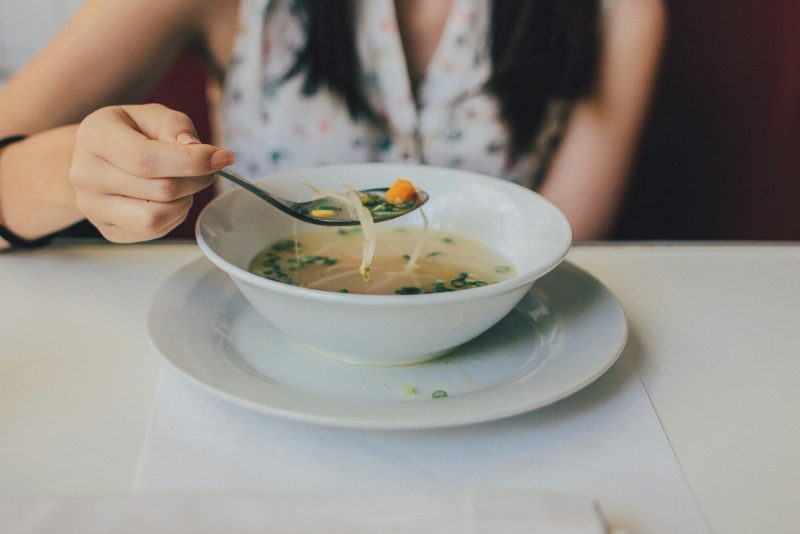
    Your friend has the flu. They text to cancel dinner, apologize unnecessarily, and mention that they haven’t eaten much. Half an hour later, you’re outside their door with soup and the bread they like. They did not ask you yo come. You wanted to make their evening less miserable, and when they settle on the sofa and start eating, you feel pleased.

    The impulse to comfort and look after someone is an expression of the CARE emotional network, one of the core emotional systems in your brain. These systems generate feelings and impulses that organize behavior around recurring problems of living. CARE makes another creature’s well-being matter to you and can make attending to it deeply rewarding.

    Why evolution made helpless creatures hard to ignore

    For mammals, producing offspring is only the beginning of the reproductive problem. A newborn needs food, warmth, and protection, often for a substantial period. An animal that successfully reproduces and then leaves its genetic prospects in the care of someone who cannot hold up their own head is probably not passing their genes far into the future. CARE helps solve that problem by making caregivers responsive to the young and motivated to keep them alive. A parent retrieves a pup that has strayed from the nest, nurses it, and responds to its distress. These activities cost time and energy, sometimes expose the parent to danger, and interrupt other things they could be doing. Nurturant feelings give them compelling reasons to do them anyway [1].

    The evolutionary advantage concerns offspring survival. The caregiver’s immediate experience can be tenderness, concern, and satisfaction when the young animal is comfortable again. As with the other emotional systems, the organism does not need to understand the reproductive consequences of its feelings for those feelings to do their work.

    In many species, nurturance extends far beyond one’s own offspring. We look after friends, partners, animals, even plants, and people we have never met. The ancient circuitry of parental care is an important foundation for all of these broad forms of affection and concern [1,2].

    What CARE feels like

    The activation of the CARE system feels like tenderness, affection, and enjoyment in looking after others. You notice that someone is uncomfortable and feel drawn to help. You want to be gentle with a frightened animal. You remember something that would make a difficult day easier for a person you love. Their relief becomes a pleasure of your own [3,4]. Evolution made useful behavior rewarding and enjoying someone else’s comfort is an effective way of becoming interested in providing it.

    CARE differs from needing someone to remain close. The PANIC/GRIEF system makes separation painful, while CARE contributes the wish for the other person to be well. In a relationship, normally, both are active at once. You may want to comfort your partner because they are suffering and also fear what their distress means for your relationship. Caring does not reproduce someone else’s feelings inside yourself. You can understand that a friend is devastated without becoming equally devastated.

    How the brain turns concern into caregiving

    CARE is a network involving hypothalamic and nearby subcortical regions, with an important role for the preoptic area. Disrupting parts of this circuitry can severely impair parental behavior. The network also interacts with the dopamine systems involved in SEEKING, helping turn nurturant motivation into activities such as building a nest and retrieving young [1]. Oxytocin, prolactin, and endogenous opioids contribute to the regulation of caregiving and its rewarding qualities. Their effects depend on the circuits and receptors involved, alongside hormonal state and experience.

    The capacities are present in both sexes and repeated exposure to pups encourages caregiving even in animals that initially avoid them. Biology provides a capacity whose expression changes with experience [1]. In human life, you also learn what care looks like, who responds to it, and what happens when you offer or need it. Being looked after can make you more tender. Experiences of rejection or exploitation can make you less prone to express care for others. Childhood trauma can reduce CARE, alongside differences in other emotional systems [5].

    The lifelong caretaker

    A strongly responsive CARE system can make affection and support rewarding parts of everyday life. You enjoy checking in, providing comfort, and noticing what would help. Stronger caring dispositions are most consistently associated with greater agreeableness and a warmer, more affiliative orientation [4,6]. They are also linked with greater comfort in closeness and stronger parental connectedness and willingness to seek support yourself during difficulty [5,7].

    A hyperactivated CARE system, however, means that nurturant feelings are unusually easy to arouse, intense, or difficult to disengage from. You manage appointments, interrupted nights, meals, and paperwork. Someone mentions a problem, and you immediately start making arrangements. You keep attending to their needs after your own capacity has run out. Even when help is neither requested nor useful, leaving the situation alone feels intolerable. You become exhausted because you are providing more care than one person can reasonably sustain. Affection does not manufacture additional hours or replace sleep [8].

    In practice, this pattern often involves several emotional systems. Concern may combine with FEAR about what could happen, PANIC/GRIEF about losing the relationship, or learned expectations that you must remain useful to remain welcome. Stronger CARE tendencies are associated with both comfort in closeness and anxiety about rejection. Caring is not exclusively linked to secure relationships [5].

    The distinction between concern and personal distress helps explain why some people can respond warmly while others become overwhelmed. Concern keeps the other person’s experience in view. Personal distress makes their suffering so uncomfortable for you that stopping the discomfort becomes urgent because of yourself. This self-focused distress is linked with depression and anxiety, whereas other-focused empathic concern does not show the same associations [9]. You may begin interrupting someone’s grief with reassurance because you cannot bear hearing it. You may take over a task because watching them struggle makes you anxious. Your wish to help can be sincere, but your response leaves little room for what they actually want and need. Some broader emotional profiles combining strong CARE tendencies with intense negative emotions also show poorer regulation and difficulty distinguishing one’s own emotions from those of others [10]. Feeling more doesn’t always means caring better.

    The strength of the feeling does also not tell us how skillfully someone responds. You can be full of concern and misunderstand what another person needs. You can offer advice when they want company, insist on helping with something they can manage, or become so invested in their recovery that they have to reassure you about it. Nurturant motivation gives you a reason to pay attention. You still have to learn whom you are paying attention to.

    What if you don’t really care so much?

    A relatively underactive CARE system would mean less spontaneous nurturance and less pleasure in looking after others. You may recognize that someone needs comfort without feeling much impulse to provide it. Affectionate gestures occur to you less often, and another person’s vulnerability may register as information without producing a strong emotional response. Weaker CARE tendencies are connected with less warmth and affiliation, including lower agreeableness [4,11,12]. In everyday relationships, the cost may be that people experience you as uninterested in their comfort. They have to ask explicitly for things that others offer spontaneously, or gradually stop approaching you when they are distressed.

    But limited nurturant feeling does not prevent considerate behavior. Empathy and prosocial action are related only moderately, and people can help through commitments, principles, and reasoning as well as emotional motivation [13,14]. You can remember that your partner has a difficult appointment and arrange to accompany them even if an urge to comfort does not sweep you off your feet. Reduced CARE also has no single clinical meaning. In can also stem from very different sources, like a lifelong lack of nurturant interest, a recent loss of tenderness, or simply exhaustion after years of caregiving [15,16].

    What kind of caring serves the life you want?

    CARE evolved because vulnerable offspring need someone to keep attending to them. In adult life, its feelings make relationships affectionate and mutually sustaining. It keeps communities, societies, and symbiotic partnerships together. Bit they can also keep you attending to someone long after the arrangement has become damaging. Feeling tenderness toward a person does not settle how much access they should have to your time or what responsibilities you should assume. You may provide what others need, love looking after them while becoming the only person whose comfort is treated as optional.

    In psychoanalysis, we explore how arrangement like that come into existence and whether they should continue. Perhaps you learned to notice everyone’s needs before they became angry or being useful was the most reliable way to receive affection. And now you feel strangely insecure when nobody needs anything. Or tenderness itself may be difficult: you learned to associate dependence with humiliation and keep your distance whenever someone becomes vulnerable, including you. The work concerns what you can feel, what you expect, and what you do with those feelings. You may need more access to affection, more freedom to refuse a demand, or the ability to accept care without immediately repaying it.

    You can still enjoy bringing your friend soup because you want to make their evening better.

    References

    [1] Panksepp, J., & Biven, L. (2012). The archaeology of mind: Neuroevolutionary origins of human emotions. W. W. Norton & Company.

    [2] Davis, K. L., & Panksepp, J. (2018). The emotional foundations of personality: A neurobiological and evolutionary approach. W. W. Norton & Company.

    [3] Pedersen, G., Selsbakk, J. M., Theresa, W., & Sigmund, K. (2014). Testing different versions of the Affective Neuroscience Personality Scales in a clinical sample. PLOS ONE, 9(10), Article e109394. https://doi.org/10.1371/journal.pone.0109394

    [4] Deak, A., Inhof, O., Nagy, L., & Csokasi, K. (2024). Affective super-traits and/or individual patterns: A variable-centered and a person-centered approach of primary emotional aspects of personality. Scientific Reports, 14, Article 4787. https://doi.org/10.1038/s41598-024-55371-4

    [5] Fuchshuber, J., Hiebler-Ragger, M., Kresse, A., Kapfhammer, H.-P., & Unterrainer, H. F. (2019). The influence of attachment styles and personality organization on emotional functioning after childhood trauma. Frontiers in Psychiatry, 10, Article 643. https://doi.org/10.3389/fpsyt.2019.00643

    [6] Marengo, D., Davis, K. L., Gradwohl, G. Ö., & Montag, C. (2021). A meta-analysis on individual differences in primary emotional systems and Big Five personality traits. Scientific Reports, 11, Article 7453. https://doi.org/10.1038/s41598-021-84366-8

    [7] Glavač, T., & Zupančič, M. (2026). The role of primary emotions in separation-individuation during emerging adulthood. Frontiers in Psychology, 17, Article 1675495. https://doi.org/10.3389/fpsyg.2026.1675495

    [8] Luchetti, M., Terracciano, A., Stephan, Y., Aschwanden, D., & Sutin, A. R. (2021). Personality and psychological health in caregivers of older relatives: A case-control study. Aging & Mental Health, 25(9), 1692–1700. https://doi.org/10.1080/13607863.2020.1758907

    [9] Hülsemann, M. J., Kaurin, A., Kollmann, B., Chmitorz, A., Ahrens, K. F., Schenk, C., Plichta, M. M., Lutz, B., Basten, U., Fiebach, C. J., Kalisch, R., Lieb, K., Reif, A., Tüscher, O., Hermes, H., Schunk, D., & Wessa, M. (2025). Self-oriented affective empathy is associated with increased negative affect. Scientific Reports, 15, Article 27767. https://doi.org/10.1038/s41598-025-09860-9

    [1] Orri, M., Pingault, J.-B., Rouquette, A., Lalanne, C., Falissard, B., Herba, C., Côté, S. M., & Berthoz, S. (2017). Identifying affective personality profiles: A latent profile analysis of the Affective Neuroscience Personality Scales. Scientific Reports, 7, Article 4548. https://doi.org/10.1038/s41598-017-04738-x

    [1] Pascazio, L., Bembich, S., Nardone, I. B., Vecchiet, C., Guarino, G., & Clarici, A. (2015). Validation of the Italian translation of the Affective Neuroscience Personality Scales. Psychological Reports, 116(1), 97–115. https://doi.org/10.2466/08.09.PR0.116k13w4

    Davis, K. L., & Montag, C. (2019). Selected principles of Pankseppian affective neuroscience. Frontiers in Neuroscience, 12, Article 1025. https://doi.org/10.3389/fnins.2018.01025

    Yin, Y., & Wang, Y. (2023). Is empathy associated with more prosocial behaviour? A meta-analysis. Asian Journal of Social Psychology, 26(1), 3–22. https://doi.org/10.1111/ajsp.12537

    Guo, R., Guo, Z., Su, Y., & Wu, Z. (2026). Affect as compensation: Self-emotions facilitate low-empathy individuals’ prosocial behavior. Journal of Pacific Rim Psychology, 20, Article 18344909261416065. https://doi.org/10.1177/18344909261416065

    Cupellaro, S., Colonnello, V., Sabatello, U., Ubertini, C., & Sogos, C. (2025). Affective Neuroscience Personality Scale (ANPS) in children with internalizing disorders. Pediatric Reports, 17(3), Article 55. https://doi.org/10.3390/pediatric17030055

    Montag, C., Widenhorn-Müller, K., Panksepp, J., & Kiefer, M. (2017). Individual differences in Affective Neuroscience Personality Scale (ANPS) primary emotional traits and depressive tendencies. Comprehensive Psychiatry, 73, 136–142. https://doi.org/10.1016/j.comppsych.2016.11.007


  • LUST: You Weren’t Planning to Want Anyone

    LUST: You Weren’t Planning to Want Anyone

    You were going to stay for one drink. Then that person arrivev, and suddenly you have opinions about where to sit. You notice their hands, the way they look at you, and whether they laugh at your jokes. You find a reason to continue a conversation that, if anyone else were having it, would have ended twenty minutes ago. Tomorrow’s early start has become negotiable. You would very much like this person to move a little closer.

    That is LUST: the core emotional system underlying erotic desire and sexual pleasure. Like the other core systems, it generates feelings and impulses that organize behavior around an evolutionary problem. In this case, getting organisms interested enough in one another to reproduce. Your immediate experience is considerably less administrative.

    Why evolution is obsessed with sex

    An animal can survive beautifully and still leave no descendants. From the standpoint of natural selection, staying alive only matters because it creates opportunities for genes to continue into subsequent generations. Reproduction is the biological outcome around which evolution has shaped living organisms; LUST is one of its most direct motivational arrangements. An animal doesn’t need to understand fertilization or decide that the population could use another member. It’s programmed to find a potential mate attractive, pursue contact, and find sexual interaction rewarding enough to do it again. Sexual feelings accomplish that without requiring any knowledge of what they are accomplishing [1].

    This also explains why wanting sex and wanting children are entirely different experiences. Evolution linked pleasure to behavior that could produce offspring. It did not require a conscious commitment to parenthood. Contraception makes that separation especially convenient, but erotic life was never restricted to reproductive occasions. For you, the reward may be pleasure, intimacy, excitement, or the satisfaction of a desire. Those are personal purposes and today, the evolutionary history of your sexuality, does not oblige you to reproduce.

    Freud suspected it

    Freud gave sexuality a much larger role in mental life than we would sometimes wish to. He proposed that libido could be redirected into other activities through sublimation, contributing to creative work and the formation of character. Sexual wishes and the efforts to restrain them could shape a life well beyond its explicitly sexual moments [2]. The evolutionary importance of reproduction gives us good reason to take sexual motivation seriously. Attracting and retaining mates could hardly have been a minor concern for generations of animals whose descendants depended on it. But that does not make Freud’s libido identical to the LUST system. In affective science, we distinguish erotic motivation from the systems underlying exploration, affection, attachment, and play. These systems cooperate, but each has something of its own to contribute [1,3]. You can want someone sexually without wanting a life with them. You can love someone deeply without wanting sex with them. And you can desperately want someone to want you while having surprisingly little interest in what would happen if they did.

    How much of your life is an attempt to look attractive?

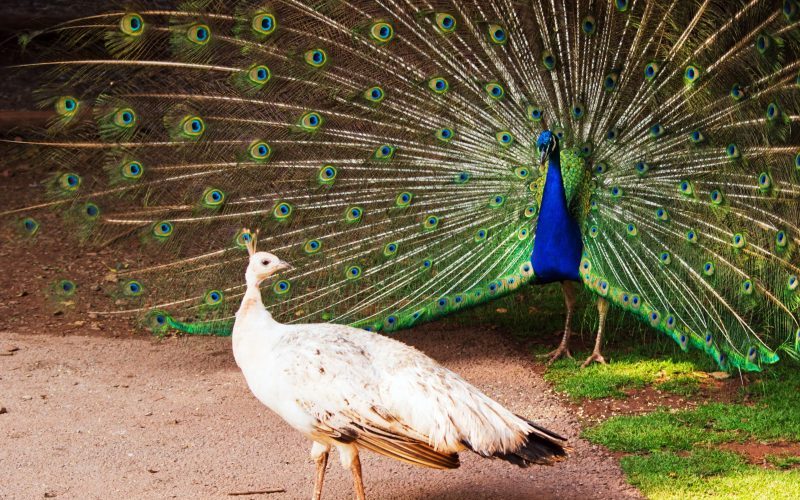
    Sexual motivation has practical problems to solve before anyone gets undressed. You need opportunities to meet people, something that attracts their attention, and reasons for them to prefer your company. Consequently, mating motives can influence activities that look like fashion, professional ambition, generosity, or an unusually committed interest in the gym. Conspicuous consumption is one example: buying something partly because other people will recognize what it says about you. A watch tells the time, but the price difference between two watches may purchase considerably more information about their owners than about the hour. In experiments, short-term mating motives increased men’s conspicuous spending, and conspicuous purchases increased their attractiveness as short-term partners [4]. Resources are only one possible advertisement. Generosity, creativity, competence, and willingness to help can also make a person attractive. Research has found that romantic motives can encourage conspicuous helpfulness as well as conspicuous consumption, with the form of the display depending on the person and situation [5].

    We can reasonably suspect that the wish to be desirable reaches further into everyday life than we explicitly acknowledge. You may enjoy your work and also enjoy becoming someone an attractive person would find impressive. You may genuinely care about a cause and become especially articulate about it when a particular person is listening. Mixed motives are ordinary. A substantial percentage of human behavior is caused by LUST, and many achievement are in reality disguised mating display. Much of your efforts into having a life you enjoy are actually efforts of having a life that makes you look worth wanting.

    How the brain makes someone sexually interesting

    Neuronally, LUST arises from interacting subcortical networks, with important roles for the hypothalamus and its connections with other regions involved in sensory processing, motivation, and bodily responses. The medial preoptic area is particularly important in male sexual behavior and the ventromedial hypothalamus in female sexual receptivity. Sex hormones influence how readily these networks respond and experience also changes what they are activated by [1]. Hypothalamic activity gradually increases during mating, tracks receptivity, and changes with hormonal state. Sexual responsiveness emerges from an interaction between the internal condition and the ongoing encounter [6]. That encounter includes everything you perceive and understand about the other person. The same touch can be welcome, uninteresting, or unpleasant depending on who is touching you, what you expect, and what has happened between you. Desire can hit out of nowhere, or build up while you’re already having a good time. Just because you aren’t in the mood before things start doesn’t mean you won’t get into it once they do [7].

    LUST also works alongside the other emotional systems. SEEKING contributes pursuit and anticipation; PLAY makes flirtation enjoyable; CARE and attachment make sexual contact part of a close relationship. FEAR, resentment, or the expectation of humiliation interfere. You live the experience as a whole person, grounded in your body, your history, and your specific circumstances.

    Sometimes it barely gets you going

    A relatively underactive LUST system would mean less erotic interest and less reward from sexual experiences. You rarely anticipate sex, feel little inclination to initiate it, or find that an experience other people describe as absorbing leaves you largely unmoved. If you want access to that pleasure, its absence can feel like a substantial loss. Lower pleasure-focused LUST activity is associated with more depressive and anxiety symptoms and greater difficulties in personality functioning. When reduced desire is personally distressing, people describe frustration, sadness, diminished confidence, and feeling less connected to a partner [7,8]. Distressing low desire is also associated with poorer quality of life and lower self-esteem [9].

    But an apparently quiet system can have several explanations. Depression, medication, pain, trauma, and relationship difficulties can all interfere with sexual interest or enjoyment [10,11]. You might have little desire generally, or little desire under the circumstances in which sex is currently not an option. Wanting less sex also does not mean you cannot love someone or build close relationships. Someone who is naturally fine with little to no sex is in a different place than someone who is grieving a loss of intimacy, and the same goes for someone who’s situation stops them from living the way they want.

    When wanting sex starts taking over

    A strongly responsive LUST system can be a considerable source of enjoyment. Higher pleasure-focused LUST activity is associated with more SEEKING and PLAY, greater trust and comfort with closeness, and less attachment anxiety. Strong partnered desire can coexist with secure attachment, self-control, and high sexual satisfaction [8,12]. Wanting sex frequently is perfectly okay [13]. Trouble begins when sexual pursuits repeatedly override decisions you otherwise want to keep. You stay online long after deciding to sleep, neglect responsibilities, or continue encounters whose consequences have already become painful. Attempts to change the pattern repeatedly fail. Impaired control, continued behavior despite harm, and interference with everyday functioning are characterized as compulsive sexual behavior [14,15].

    Compulsion does not deliver more pleasure. A person can spend increasing amounts of time pursuing sexual stimulation while finding the experience less satisfying. Research distinguishes stronger sexual drive from aspects of compulsivity associated with negative consequences and poorer sexual functioning [16]. Here, it helps to investigate what the pursuit is doing. Sometimes you want erotic pleasure. Sometimes being desired provides temporary relief from feeling unattractive, rejected, or insignificant. Sexual activity can serve several emotional purposes at once, and increasing its frequency may do little to resolve the distress that keeps sending you back.

    When you want different amounts

    In a relationship, the difficulty is often the difference between two people’s desires. Neither person needs an unusually strong or weak LUST response for the discrepancy to become painful. One begins to experience initiation as another opportunity for rejection; the other begins to experience affection as the opening of a negotiation they don’t want to have. Persistent desire discrepancies predict sexual distress, particularly when the difference is experienced as a problem [17,18].

    It’s important how partners respond. Affectionate responses are associated with greater satisfaction despite low desire, while hostile or dismissive responses are associated with poorer outcomes. Couples can also preserve closeness and relationship satisfaction through affection and everyday support even when they can’t solve the discrepancy [19,20,21]. The person who wants more is allowed to miss sex. The person who wants less is allowed to decline it. Making room for both experiences gives you a better chance of understanding what is possible than treating either desire or refusal as an offense.

    What do you want your sexuality to give you?

    Evolution explains why sexual pleasure is such a powerful incentive. But every one of us is different in how much of our life we want to organize around it, whom we want to share it with, what we a re ready to do for it, which consequences we are willing to accept, etc. In psychoanalysis, we explore what happens to desire in your life. Perhaps wanting someone makes you feel dangerously dependent. Perhaps being wanted matters more than enjoying the encounter. Perhaps you lose interest once affection becomes dependable, or cannot enjoy pleasure without turning it into a test of your performance. Understanding those patterns means working through the expectations, fears, and experiences that organize what happens.

    The aim is to have more freedom to enjoy what you want, recognize what you don’t, make acceptable decisions, remain satisfied after the immediate excitement has passed. That may mean recovering an erotic life you miss, bringing a compulsive pursuit under control, accepting that sex occupies less space in your life than other people think it should, etc.

    Back at the gathering, you may decide to stay. You may discover that the interest is mutual and be delighted you did. You can enjoy the desire and still go home. You can go home together. You may also decide that wanting this person does not make the available arrangement worth it. There is never a single, unambiguous answer. It is an encounter with your own internal economy, where desire, prohibitions, and your past experiences constantly test one another.

    References

    [1] Panksepp, J., & Biven, L. (2012). The archaeology of mind: Neuroevolutionary origins of human emotions. W. W. Norton & Company.

    [2] Freud, S. (1920). Three contributions to the theory of sex (A. A. Brill, Trans.; 2nd ed.). Nervous and Mental Disease Publishing Company. https://www.gutenberg.org/ebooks/14969 (Original work published 1905)

    [3] Davis, K. L., & Panksepp, J. (2018). The emotional foundations of personality: A neurobiological and evolutionary approach. W. W. Norton & Company.

    [4] Sundie, J. M., Kenrick, D. T., Griskevicius, V., Tybur, J. M., Vohs, K. D., & Beal, D. J. (2011). Peacocks, Porsches, and Thorstein Veblen: Conspicuous consumption as a sexual signaling system. Journal of Personality and Social Psychology, 100(4), 664–680. https://doi.org/10.1037/a0021669

    [5] Griskevicius, V., Tybur, J. M., Sundie, J. M., Cialdini, R. B., Miller, G. F., & Kenrick, D. T. (2007). Blatant benevolence and conspicuous consumption: When romantic motives elicit strategic costly signals. Journal of Personality and Social Psychology, 93(1), 85–102. https://doi.org/10.1037/0022-3514.93.1.85

    [6] Liu, M., Nair, A., Coria, N., Linderman, S. W., & Anderson, D. J. (2024). Encoding of female mating dynamics by a hypothalamic line attractor. Nature, 634(8035), 901–909. https://doi.org/10.1038/s41586-024-07916-w

    [7] Clayton, A. H., Goldstein, I., Kim, N. N., Althof, S. E., Faubion, S. S., Faught, B. M., Parish, S. J., Simon, J. A., Vignozzi, L., Christiansen, K., Davis, S. R., Freedman, M. A., Kingsberg, S. A., Kirana, P.-S., Larkin, L., McCabe, M., & Sadovsky, R. (2018). The International Society for the Study of Women’s Sexual Health process of care for management of hypoactive sexual desire disorder in women. Mayo Clinic Proceedings, 93(4), 467–487. https://doi.org/10.1016/j.mayocp.2017.11.002

    [8] Fuchshuber, J., Jauk, E., Hiebler-Ragger, M., & Unterrainer, H. F. (2022). The affective neuroscience of sexuality: Development of a LUST scale. Frontiers in Human Neuroscience, 16, Article 853706. https://doi.org/10.3389/fnhum.2022.853706

    [9] Goldstein, I., Kim, N. N., Clayton, A. H., DeRogatis, L. R., Giraldi, A., Parish, S. J., Pfaus, J. G., Simon, J. A., Kingsberg, S. A., Meston, C. M., Stahl, S. M., Wallen, K., & Worsley, R. (2017). Hypoactive sexual desire disorder: International Society for the Study of Women’s Sexual Health (ISSWSH) expert consensus panel review. Mayo Clinic Proceedings, 92(1), 114–128. https://doi.org/10.1016/j.mayocp.2016.09.018

    [10] Basson, R., & Gilks, T. (2018). Women’s sexual dysfunction associated with psychiatric disorders and their treatment. Women’s Health, 14, Article 1745506518762664. https://doi.org/10.1177/1745506518762664

    [11] Worsley, R., Bell, R. J., Gartoulla, P., & Davis, S. R. (2017). Prevalence and predictors of low sexual desire, sexually related personal distress, and hypoactive sexual desire dysfunction in a community-based sample of midlife women. The Journal of Sexual Medicine, 14(5), 675–686. https://doi.org/10.1016/j.jsxm.2017.03.254

    [12] Dosch, A., Rochat, L., Ghisletta, P., Favez, N., & Van der Linden, M. (2016). Psychological factors involved in sexual desire, sexual activity, and sexual satisfaction: A multi-factorial perspective. Archives of Sexual Behavior, 45(8), 2029–2045. https://doi.org/10.1007/s10508-014-0467-z

    [13] Briken, P., Bőthe, B., Carvalho, J., Coleman, E., Giraldi, A., Kraus, S. W., Lew-Starowicz, M., & Pfaus, J. G. (2024). Assessment and treatment of compulsive sexual behavior disorder: A sexual medicine perspective. Sexual Medicine Reviews, 12(3), 355–370. https://doi.org/10.1093/sxmrev/qeae014

    [14] Dickenson, J. A., Gleason, N., Coleman, E., & Miner, M. H. (2018). Prevalence of distress associated with difficulty controlling sexual urges, feelings, and behaviors in the United States. JAMA Network Open, 1(7), Article e184468. https://doi.org/10.1001/jamanetworkopen.2018.4468

    [15] Castro-Calvo, J., Gil-Llario, M. D., Giménez-García, C., Gil-Juliá, B., & Ballester-Arnal, R. (2020). Occurrence and clinical characteristics of compulsive sexual behavior disorder (CSBD): A cluster analysis in two independent community samples. Journal of Behavioral Addictions, 9(2), 446–468. https://doi.org/10.1556/2006.2020.00025

    [16] Glica, A., Wizła, M., Gola, M., & Lewczuk, K. (2023). Hypo- or hyperfunction? Differential relationships between compulsive sexual behavior disorder facets and sexual health. The Journal of Sexual Medicine, 20(3), 332–345. https://doi.org/10.1093/jsxmed/qdac035

    [17] Jodouin, J.-F., Rosen, N. O., Merwin, K., & Bergeron, S. (2021). Discrepancy in dyadic sexual desire predicts sexual distress over time in a community sample of committed couples: A daily diary and longitudinal study. Archives of Sexual Behavior, 50(8), 3637–3649. https://doi.org/10.1007/s10508-021-01967-0

    [18] Peixoto, M. M. (2022). Problematic sexual desire discrepancy in heterosexuals, gay men and lesbian women: Differences in sexual satisfaction and dyadic adjustment. Psychology & Sexuality, 13(5), 1231–1241. https://doi.org/10.1080/19419899.2021.1999313

    [19] Belu, C. F., Corsini-Munt, S., Dubé, J. P., Wang, G. A., & Rosen, N. O. (2023). Partner responses to low desire among couples coping with male hypoactive sexual desire disorder and associations with sexual well-being. The Journal of Sexual Medicine, 20(7), 955–964. https://doi.org/10.1093/jsxmed/qdad069

    [20] Jang, G. E., Corsini-Munt, S., Shimizu, J. P. K., Belu, C. F., Wang, G. A., & Rosen, N. O. (2025). Sexual rejection behaviors used by men with hypoactive sexual desire disorder: Associations with couples’ sexual and relationship outcomes. Journal of Sex & Marital Therapy, 51(8), 845–862. https://doi.org/10.1080/0092623X.2025.2557476

    [21] Arenella, K., Girard, A., & Connor, J. (2024). Desire discrepancy in long-term relationships: A qualitative study with diverse couples. Family Process, 63(3), 1201–1216. https://doi.org/10.1111/famp.12967

  • RAGE: The Part of You That Has Had Enough

    RAGE: The Part of You That Has Had Enough

    You’ve already said you can’t take on the extra work. You have plans for the weekend, and you’re barely keeping up with what’s already yours. Then, halfway through the meeting, your colleague announces that you’ll finish the report by Monday. You feel head exploding. You want to interrupt and make it unmistakably clear that they don’t get to volunteer your time. Do you actually say anything? Do you swallow the response and stew over it all evening? Or deliver a speech so comprehensive that the original scheduling problem becomes a secondary concern?

    The mobilization comes from what we call the RAGE system: one of the ancient emotional networks located deep in the oldest pars of your your brain. These systems generate feelings and impulses that organize behavior around problems of living. RAGE helps you resist interference, overcome obstacles, and defend what matters when someone or something gets in the way.

    Why evolution gave you the urge to push back

    An animal that can only withdraw has limited options. Sometimes it needs to defend food, resist being restrained, or prevent another animal from taking over its space. Giving way every time can mean losing access to resources necessary for survival and reproduction. Resistance is being motivated by the RAGE network. It’s being activated by an obstacle, a restrain, an invasion, etc. You feel it as frustration and irritation, when you are are pursuing something you need and encounter an obstacle, or an expected reward is suddenly withheld, or something valuable it being taken away from so. The response becomes forceful, directed toward removing the obstruction or making the interference stop [1,2].

    For our ancestors, this capacity helped protect resources and resist mistreatment by other people. An angry response could make taking something costly enough that a competitor reconsidered. Even the prospect of resistance could influence how someone treated you. And the same basic function remains recognizable when you challenge an unpaid invoice, object to someone using your belongings without asking, refuse another demand on your time, etc. You don’t necessarily attack, but the RAGE network mobilized the impulse to oppose and supports a firm response. Other people, of course, may find the response inconvenient, but their preference doesn’t necessarily serves you.

    RAGE doesn’t always mean losing your shit

    The name RAGE describes the primary emotional system, not the intensity of every experience it produces. Its activation contributes to ordinary irritation as well as overwhelming fury. Feeling annoyed that someone interrupted you and feeling ready to throw their phone out of the window differ substantially in intensity, even though both can involve the same underlying capacity for anger. Biologically, anger is your personal guard. It prepares your mind and body for action; it narrows your attention and fuels behavior that defends your interests. But what you do can range from making an epic scene to redirect your furry into the best workout you’ve ever done, working eight months on your business idea and succeeding because someone told you you’ll never make it, or just overthinking in the shower [1].

    How the brain prepares you to resist

    RAGE circuitry is connecting medial regions of the amygdala with the medial hypothalamus and the periaqueductal gray in the midbrain. These interacting structures help organize the bodily and behavioral response. Stimulation studies are central to identifying this network: activating particular sites provokes defensive attack in animals and intense angry feelings in humans [1]. More recent research continues to emphasize hypothalamic, amygdalar, and midbrain pathways, alongside prefrontal influences that help regulate responding. It also shows that the threshold for aggression changes with internal conditions and previous experience. The circuitry operates within an organism that may be hungry, stressed, or already primed by earlier encounters [3].

    Your thinking participates too. An interpretation can intensify the feeling: “They forgot” becomes “They think I’m beneath consideration.” Rehearsing the incident can repeatedly renew the anger, even after the other person has gone home and forgotten the conversation. Equally, discovering that you misunderstood what happened can change the response. You inherit the capacity to become angry, and experience helps determine what activates it, how quickly it escalates, and what you expect will happen if you express it.

    When everything starts to feel like a provocation

    A readily activated RAGE system can leave you frequently irritated, quick to detect hostility, and inclined to retaliate. Across personality studies, stronger anger-proneness is associated with greater emotional instability and lower agreeableness. The pattern includes more antagonistic interactions and angry hostility; heightened RAGE responses also predict vengefulness [4,5,6,7]. You begin responding to disagreements as challenges that must be defeated. A delay feels disrespectful, a correction feels humiliating, and someone asking you to wait seems to have fundamentally misunderstood who they’re dealing with. People prone to intense anger tend to interpret situations as more hostile and have greater difficulty managing hostile thoughts and feelings [8]. The consequences can become serious. Frequent, poorly regulated anger is linked to verbal and physical altercations, intimate partner violence, and cardiovascular health costs. Pronounced anger is associated with destructive conflict and difficulties recognizing and regulating emotional responses [9,10].

    Sometimes the system remains activated because the conflict continues internally. You replay the insult, refine your response, and imagine the other person finally understanding what an absolute bastard they’ve been. Anger rumination, hostility, and suppression feature prominently in maladaptive anger patterns; broader research links anger with more rumination and avoidance and less acceptance and reappraisal [10,11]. At that point, the emotion may be consuming resources without helping you defend anything. You’ve spent three hours prosecuting someone in your head, and the unpaid invoice is still unpaid. Heightened irritability can also be part of broader emotional distress. Depressive presentations include elevated anger, and a low threshold for activating RAGE and SADNESS is characteristic of borderline personality disorder. Meaning, we need to understand anger within the person’s whole emotional life [12,13].

    Maybe you don’t get angry enough?

    People who are less prone to anger often have an easier time cooperating and maintaining relationships. Lower anger-proneness is associated with less aggression, better social skills, and greater control over angry behavior. A disposition that includes less frequent anger can therefore look as if it’s serving you very well [4,14]. However, an underactive RAGE system becomes a problem, too, when there is too little defensive mobilization. People repeatedly take advantage of you, and you recognize the disadvantage without feeling much impetus to oppose it. You surrender time or resources because the week emotional pressure to protect them. A high threshold for RAGE activation also appears in dependent personality disorder [12,15].

    The distinction is whether your calm leaves you able to act in your own interests. Agreeableness can make you pleasant company while making it easier for others to overlook what you want or take advantage of you. Assertive anger helps maintain social boundaries, even when the person encountering those boundaries finds you considerably less agreeable than before [16]. Being easy to deal with is a social advantage, but being easy to overrule is a cost you pay for it.

    Only making sure nobody notices?

    Or, you might be suppressing it. Suppressed anger can look similar to a weakly activated RAGE system from the outside. Internally, they are very different. You might feel little opposition to a demand, or you might feel intensely opposed while saying, “Sure, no problem.” In the second case, the anger is present, only expressing it feels too costly. Perhaps FEAR anticipates retaliation, or PANIC/GRIEF makes the possibility of rejection unbearable. You may have learned that anger makes people signal you are selfish, dangerous, or unlovable. Suppression can then become so habitual that you may only notice the exhaustion or resentment, but have a hard time recognize what you wanted to protest.

    Suppressing anger can make you appear warmer and more competent, even while broader patterns of emotional suppression are associated with poorer relationships and social well-being [17,18]. Bur the tradeoff has consequences. People may approve of your composure partly because they never have to deal with your objection. But suppression is characterized by rumination, inwardly directed anger, and hostility despite little outward expression. Holding anger is also linked to poorer interpersonal interactions shortly afterward [10,19]. Choosing to postpone a confrontation can sometimes be smart, of course. But if you always sweep your opposition under the rug, it’ll eat you from the inside out and then start nibbling on your surroundings.

    What do you want your anger to accomplish?

    Evolution supplied you with the capacity to defend yourself, but you need to work out on you own what is worth fighting for and how to respond in a way that serves the life you want. Sometimes that means insisting on something and other times it means negotiating, leaving, or deciding that nothing worthy in being offered by an argument. The colleague who volunteered your weekend committed your time. Silently doing the work to preserve everyone else’s comfort is teaching them that your refusal is negotiable. Humiliating them in front of everyone might feel satisfying, but it could leave you with a much larger problem. You do nee to correct the commitment and prevent it from becoming a precedent.

    In psychoanalysis, we can examine what makes those alternatives feel compelling or unavoidable. Why does being contradicted feel like being defeated? Why does saying no seem to require an apology? What do you expect someone to do if they discover that you’re angry with them? Those expectations have histories, and they influence whether you attack, submit, or manage to say what you actually mean. The aim is to have access to your anger without needing either an explosion or a cover story. You can recognize that something matters, tolerate another person’s displeasure, and respond deliberately. In this case, the necessary sentence might be quite short: “Oh, I already said I wasn’t available, you might have forgotten. No worries, but you’ll need to make another arrangement.” It may not give you the satisfaction of delivering your beautifully rehearsed indictment, it does, however, give you back your weekend.

    References

    [1] Panksepp, J., & Biven, L. (2012). The archaeology of mind: Neuroevolutionary origins of human emotions. W. W. Norton & Company.

    [2] Montag, C., & Panksepp, J. (2017). Primary emotional systems and personality: An evolutionary perspective. Frontiers in Psychology, 8, Article 464. https://doi.org/10.3389/fpsyg.2017.00464

    [3] Santin, M. d. N. (2025). The neurophysiology of aggressiveness: From adaptive behavior to pathology and deep brain stimulation. Neurophysiologie Clinique, 55(5), Article 103090. https://doi.org/10.1016/j.neucli.2025.103090

    [4] Marengo, D., Davis, K. L., Gradwohl, G. Ö., & Montag, C. (2021). A meta-analysis on individual differences in primary emotional systems and Big Five personality traits. Scientific Reports, 11, Article 7453. https://doi.org/10.1038/s41598-021-84366-8

    [5] Montag, C., Davis, K. L., Lazarević, L. B., & Knežević, G. (2019). A Serbian version of the ANPS and its link to the five-factor model of personality. Open Psychology, 1(1), 303–316. https://doi.org/10.1515/psych-2018-0019

    [6] Sindermann, C., Luo, R., Zhao, Z., Li, Q., Li, M., Kendrick, K. M., Panksepp, J., & Montag, C. (2018). High ANGER and low agreeableness predict vengefulness in German and Chinese participants. Personality and Individual Differences, 121, 184–192. https://doi.org/10.1016/j.paid.2017.09.004

    [7] Glavač, T., & Zupančič, M. (2024). The Affective Neuroscience Personality Scales (ANPS) in Slovenia: Validation of the six primary scales across three ANPS versions. Open Psychology, 6(1), Article 20240002. https://doi.org/10.1515/psych-2024-0002

    [8] Veenstra, L., Bushman, B. J., & Koole, S. L. (2018). The facts on the furious: A brief review of the psychology of trait anger. Current Opinion in Psychology, 19, 98–103. https://doi.org/10.1016/j.copsyc.2017.03.014

    [9] Beames, J. R., O’Dean, S. M., Grisham, J. R., Moulds, M. L., & Denson, T. F. (2019). Anger regulation in interpersonal contexts: Anger experience, aggressive behavior, and cardiovascular reactivity. Journal of Social and Personal Relationships, 36(5), 1441–1458. https://doi.org/10.1177/0265407518819295

    [10] Larsson, J., Bjureberg, J., & Hesser, H. (2023). Anger profiles among individuals seeking treatment for maladaptive anger: Associations with emotion regulation. Clinical Psychology & Psychotherapy, 30(3), 599–610. https://doi.org/10.1002/cpp.2821

    [11] Pop, G. V., Nechita, D.-M., Miu, A. C., & Szentágotai-Tătar, A. (2025). Anger and emotion regulation strategies: A meta-analysis. Scientific Reports, 15, Article 6931. https://doi.org/10.1038/s41598-025-91646-0

    [12] Karterud, S., Pedersen, G., Johansen, M., Wilberg, T., Davis, K. L., & Panksepp, J. (2016). Primary emotional traits in patients with personality disorders. Personality and Mental Health, 10(4), 261–273. https://doi.org/10.1002/pmh.1345

    [13] Cupellaro, S., Colonnello, V., Sabatello, U., Ubertini, C., & Sogos, C. (2025). Affective Neuroscience Personality Scale (ANPS) in children with internalizing disorders. Pediatric Reports, 17(3), Article 55. https://doi.org/10.3390/pediatric17030055

    [14] Alcázar-Olán, R. J., González-Fragoso, C., Jiménez-Rodríguez, D., & Rojas-Solís, J. L. (2018). Low (not high) trait anger is a personal strength in adolescents. Acción Psicológica, 15(2), 83–94. https://doi.org/10.5944/ap.15.2.21748

    [15] Davis, K. L., & Montag, C. (2019). Selected principles of Pankseppian affective neuroscience. Frontiers in Neuroscience, 12, Article 1025. https://doi.org/10.3389/fnins.2018.01025

    [16] Faustino, B., Fonseca, I., & Oliveira, J. (2025). Brief form of the Affective Neuroscience Personality Scales: Preliminary psychometric properties in a European Portuguese community sample. Psychological Reports, 128(5), 3853–3871. https://doi.org/10.1177/00332941231202016

    [17] Chervonsky, E., & Hunt, C. (2017). Suppression and expression of emotion in social and interpersonal outcomes: A meta-analysis. Emotion, 17(4), 669–683. https://doi.org/10.1037/emo0000270

    [18] Green, D. J., Klein, N. D., & Hugenberg, K. (2026). Suppressing versus expressing anger influences person perceptions of warmth and competence. Emotion, 26(4), 815–834. https://doi.org/10.1037/emo0001605

    [19] Dial, B., Zawadzki, M. J., Graham-Engeland, J. E., Witzel, D. D., Tobin, J. N., Cassells, A., & Brondolo, E. (2025). Discrimination moderates associations between momentary anger coping and subsequent interpersonal interaction quality. Journal of Social and Personal Relationships, 42(10), 3034–3055. https://doi.org/10.1177/02654075251358123

  • FEAR: Your Brain Has Already Diagnosed You

    FEAR: Your Brain Has Already Diagnosed You

    You notice a lump while showering. You check again, hoping your fingers have made an administrative error. They haven’t. Within minutes, you’re Googling in your towel, and of course one of the first explanations contains the word cancer. That’s the one you keep reading. You arrange a medical appointment, then spend the evening touching the lump, reviewing your recent tiredness, and wondering whether the holiday you booked was presumptuous. Nothing has been diagnosed, but emotionally, you’re already living several chapters ahead, in the worse scenario alternative universe.

    This is the kind of situation where your the FEAR network has been recruited: one of the core emotional systems. Emotional systems generate feelings and impulses that organize behavior around problems of living. FEAR makes danger urgent enough to interrupt what you are doing and take action to protect yourself.

    Being scared kept your ancestors alive

    A small mammal hears movement nearby and stops feeding. It gets still, listens to the sound, and get’s ready to escape. If it identifies a predator, it bolts toward shelter. Feeding can resume later, provided the animal remains available to do it. The FEAR neural network coordinates these changes in priorities. It directs attention toward possible harm, prepares the body for defensive action, and makes getting to safety feel urgent. Freezing can reduce detection and allow assessment; flight creates distance. When escape is blocked, defense may involve fighting. The response depends on the situation, including how close the danger is and what routes out are available [1].

    Our ancestors faced predators, hostile humans, injuries, and dangerous terrain. Too little fear reduced their chances of surviving long enough to reproduce. Failing to recognize a serious threat could end a lineage, whereas retreating unnecessarily usually only cost some time, energy, or an opportunity. That unequal cost favored a system responding before danger was certain. This can be described through the smoke detector principle: a protective system can produce many false alarms because missing one real emergency would be much more costly [2]. It explains why we so often suffer from excessive fear. Evolution left us with a generous capacity for precaution, including precautions we never needed. Your peace of mind was not the criterion by which your emotional system was selected.

    The capacity is inherited, the dangers are supplied by experience

    You don’t have to learn how to feel afraid from scratch. Mammals inherit the capacity for feelings of FEAR, along with sensitivities that help direct them away from danger. Much of what eventually frightens you, however, acquires that significance through experience. Evolution didn’t provide an innate response to a biopsy appointment, but it provided the hardware for it [1,3]. You learn through what happens to you, and through what you witness. A frightening medical experience can make a white coat feel threatening long afterward. Watching someone you love become seriously ill can change what a word you barely understood yesterday can start mean for you. Learning also works in the other direction. Experience can teach you that you can overcome something you previously expected to overwhelm you. Your particular fears have a history, and that history continues to develop through out your life.

    Human imagination greatly extends your perception’s reach. You can anticipate danger long before it happens, rehearse its consequences, and become afraid of becoming afraid. This capacity helps you plan, but it also means you can spend an otherwise uneventful afternoon suffering through a future that never happens.

    What FEAR does to your mind and body

    Like other emotional systems, the activation of the FEAR system directs your attention and behavior. During the disease scare, a routine ache suddenly becomes relevant, while the TV show you were enjoying becomes almost impossible to follow. You remember alarming stories, inspect your body, and try to establish whether you’re safe. Your thoughts become organized around a hypothetical problem that seems impossible to shake off. The bodily response can be intrusive. Your muscles tense, your mouth dries, and your heartbeat becomes conspicuous. You may want to act immediately or find yourself momentarily unable to act.

    The FEAR system creates feelings of fear and anxiety. While fear is commonly associated with a distinctive threat, anxiety involves anticipating harm that is more diffused and blurred. But both can have more than one emotional source. In affective science, the feelings of FEAR concern danger, while feelings of PANIC/GRIEF concern separation and loss. A disease scare can recruit both: you may dread pain and death while also becoming distressed at the thought of leaving people you love or facing illness alone [1].

    How the FEAR network organizes protection

    The amygdala receives much of the publicity, but FEAR involves a broader network. Affective science describes interacting pathways connecting the amygdala, hypothalamus, and periaqueductal gray, a region in the midbrain involved in defensive responses. These pathways help coordinate bodily changes with actions such as freezing and escape [1]. Different parts of this network contribute as a threat develops. We can observe interactions among the amygdala, hippocampus, hypothalamus, and periaqueductal gray, with cortical networks contributing to planning and interpreting ambiguous danger. The neural activity changes as an animal moves from assessing possible danger to confronting an approaching predator [4]. Recognizing a warning, remembering where something dangerous happened, and selecting an escape route require coordinated processes. The subjective feeling is one part of a larger organization of perception and action.

    You might be genetically predisposed and/or conditioned by experience for a higher FEAR activation. Higher FEAR is associated with greater vigilance, worry, avoidance, and psychological distress. Across personality studies, it is among the strongest emotional correlates of neuroticism, particularly its anxiety component. At the other extreme, very low fearfulness is associated with greater risk taking and weaker sensitivity to punishment, with problems tending toward disinhibited behavior rather than anxious withdrawal [5,6,7,8].

    When protection takes over

    With a hyperactivated FEAR system, your attention is being hold hostage by possible threats. You struggle to stop scanning for signs that something is wrong and considering what those signs might mean. Hyperactivated FEAR predicts more vigilant coping, while anxious traits are associated with greater fear generalization, meaning that the response spreads beyond the original danger to other situations that resemble it [9,10]. The consequences extend beyond feeling nervous. Persistent fear can interfere with sleep, concentration, decision-making, and general well-being. Higher FEAR activation is associated with depressive tendencies, and even higher separation distress alongside lower activation of SEEKING and PLAY networks. It makes sense: as protection takes priority, there’s less room for exploration and enjoyment [11,12,13].

    Avoidance is one of the main ways these problem sustains themself. If you escape a situation and immediately feel better, escaping becomes attractive. But avoiding something safe prevents you from discovering that the feared outcome would not have occurred, or that you could have managed the experience. The relief robs you of the opportunity to revise your expectations [14,15]. You surely have the experience of being so afraid of something that you postpone it. The procrastination brings a moment of relief, even the issue remains unsolved. The pattern might mean declining invitations, avoiding travel, refusing opportunities that involve being assessed, and much more. Studies find that people with anxiety disorders continue making costly avoidance choices even when approaching would bring a reward [16]. Your life can become increasingly organized around what you try to prevent yourself from feeling.

    What if you’re barely afraid?

    But you might live on the other end of the spectrum. Not so likely, but still possible. An underactive FEAR system provides less emotional warning and less pressure to protect yourself. You may recognize a risk intellectually without feeling much hesitation about taking it. A dangerous situation does not interrupt what you are doing, or the prospect of a bad consequence carries too little weight to change your behavior. This has an obvious evolutionary disadvantage. Animals that failed to avoid serious dangers were less likely to survive and reproduce. The too-little-fear crowd had therefore fewer opportunities to pass on their dispositions, which helps explain why excessive fear is a much more prominent problem than insufficient fear.

    Low fearfulness nevertheless exists, and its costs are visible. Research connects it with greater risk taking, punishment insensitivity, and, in some groups, conduct problems and psychopathic features [7,17,18]. Studies of people with bilateral amygdala damage have also documented striking reductions in fear and anxiety-like avoidance [19,20]. Danger does need to receives enough emotional weight to guide your choices. Being able to remain calm when you’re safe is useful, but feeling little concern when you’re genuinely at risk can leave you repeatedly exposed to consequences that a more fearful person would have taken considerable trouble to avoid.

    How afraid should you be?

    FEAR can help leave a threatening situation, or reconsider a dangerous decision. Its evolutionary value, however, doesn’t make every precaution worth its cost. You can spend so much of your life preventing possible harm that the activities and relationships you wanted to protect become difficult to reach. The important question is what whether your behavior guided by the FEAR system serve your purposes. During a disease scare, obtaining appropriate medical care addresses the possible illness. Repeatedly checking, searching, or demanding reassurance may become dysfunctional thought.

    In psychoanalysis, we examine what gives your FEAR it’s particular force. Perhaps earlier experiences taught you that catastrophe arrives without warning. Perhaps the people you depended on dismissed danger until it was too late, leaving you convinced that vigilance is entirely your responsibility. Perhaps uncertainty itself has become intolerable because you associate not knowing with being helpless. Understanding those expectations gives us something to work on, alongside the repeated experience of responding differently. You don’t need to become fearless. You need enough room, however, to recognize if your precaution is consuming more than it protects.

    You can attend the appointment and follow the medical advice without spending every intervening hour mentally rehearsing your death. The life you’re trying to preserve also needs to be enjoyable enought.

    References

    [1] Panksepp, J., & Biven, L. (2012). The archaeology of mind: Neuroevolutionary origins of human emotions. W. W. Norton & Company.

    [2] Nesse, R. M. (2019). Good reasons for bad feelings: Insights from the frontier of evolutionary psychiatry. Dutton.

    [3] Davis, K. L., & Panksepp, J. (2018). The emotional foundations of personality: A neurobiological and evolutionary approach. W. W. Norton & Company.

    [4] Melleu, F. F., & Canteras, N. S. (2025). Neural circuits of fear and anxiety: Insights from a neuroethological perspective. Physiology, 40(3), 208–223. https://doi.org/10.1152/physiol.00042.2024

    [5] Marengo, D., Davis, K. L., Gradwohl, G. Ö., & Montag, C. (2021). A meta-analysis on individual differences in primary emotional systems and Big Five personality traits. Scientific Reports, 11, Article 7453. https://doi.org/10.1038/s41598-021-84366-8

    [6] Montag, C., Davis, K. L., Lazarević, L. B., & Knežević, G. (2019). A Serbian version of the ANPS and its link to the five-factor model of personality. Open Psychology, 1(1), 303–316. https://doi.org/10.1515/psych-2018-0019

    [7] Watson, D., Clark, L. A., Simms, L. J., & Kotov, R. (2022). Classification and assessment of fear and anxiety in personality and psychopathology. Neuroscience & Biobehavioral Reviews, 142, Article 104878. https://doi.org/10.1016/j.neubiorev.2022.104878

    [8] Lynch, S. J., Sunderland, M., Forbes, M. K., Teesson, M., Newton, N. C., & Chapman, C. (2024). Structure of psychopathology in adolescents and its association with high-risk personality traits. Development and Psychopathology, 36(1), 379–394. https://doi.org/10.1017/S0954579422001262

    [9] Jung, S., Sindermann, C., Yang, H., Elhai, J. D., & Montag, C. (2023). Anxiety-related coping styles and individual differences in primary emotional systems against the background of affective neuroscience theory: A study using samples from Germany and China. Trends in Psychology, 31(4), 740–756. https://doi.org/10.1007/s43076-022-00161-y

    [10] Sep, M. S. C., Steenmeijer, A., & Kennis, M. (2019). The relation between anxious personality traits and fear generalization in healthy subjects: A systematic review and meta-analysis. Neuroscience & Biobehavioral Reviews, 107, 320–328. https://doi.org/10.1016/j.neubiorev.2019.09.029

    [11] Montag, C., Widenhorn-Müller, K., Panksepp, J., & Kiefer, M. (2017). Individual differences in Affective Neuroscience Personality Scale (ANPS) primary emotional traits and depressive tendencies. Comprehensive Psychiatry, 73, 136–142. https://doi.org/10.1016/j.comppsych.2016.11.007

    [12] Montag, C., Sanwald, S., Widenhorn-Müller, K., GenEmo Research Group, & Kiefer, M. (2022). Investigating primary emotional systems and the Big Five of Personality including their relations in patients with major depression and healthy control persons. Neuropsychoanalysis, 24(2), 149–158. https://doi.org/10.1080/15294145.2022.2140694

    [13] Cupellaro, S., Colonnello, V., Sabatello, U., Ubertini, C., & Sogos, C. (2025). Affective Neuroscience Personality Scale (ANPS) in children with internalizing disorders. Pediatric Reports, 17(3), Article 55. https://doi.org/10.3390/pediatric17030055

    [14] Ball, T. M., & Gunaydin, L. A. (2022). Measuring maladaptive avoidance: From animal models to clinical anxiety. Neuropsychopharmacology, 47(5), 978–986. https://doi.org/10.1038/s41386-021-01263-4

    [15] Arnaudova, I., Kindt, M., Fanselow, M., & Beckers, T. (2017). Pathways towards the proliferation of avoidance in anxiety and implications for treatment. Behaviour Research and Therapy, 96, 3–13. https://doi.org/10.1016/j.brat.2017.04.004

    [16] Pittig, A., Boschet, J. M., Glück, V. M., & Schneider, K. (2021). Elevated costly avoidance in anxiety disorders: Patients show little downregulation of acquired avoidance in face of competing rewards for approach. Depression and Anxiety, 38(3), 361–371. https://doi.org/10.1002/da.23119

    [17] Fanti, K. A., Panayiotou, G., Lazarou, C., Michael, R., & Georgiou, G. (2016). The better of two evils? Evidence that children exhibiting continuous conduct problems high or low on callous–unemotional traits score on opposite directions on physiological and behavioral measures of fear. Development and Psychopathology, 28(1), 185–198. https://doi.org/10.1017/S0954579415000371

    [18] Schneider, S., Hofmann, M. J., & Mokros, A. (2025). Psychopathic personality traits are associated with experimentally induced approach and appraisal of fear-evoking stimuli indicating fear enjoyment. Scientific Reports, 15, Article 8646. https://doi.org/10.1038/s41598-025-91652-2

    [19] Feinstein, J. S., Adolphs, R., Damasio, A., & Tranel, D. (2011). The human amygdala and the induction and experience of fear. Current Biology, 21(1), 34–38. https://doi.org/10.1016/j.cub.2010.11.042

    [20] Korn, C. W., Vunder, J., Miró, J., Fuentemilla, L., Hurlemann, R., & Bach, D. R. (2017). Amygdala lesions reduce anxiety-like behavior in a human benzodiazepine-sensitive approach–avoidance conflict test. Biological Psychiatry, 82(7), 522–531. https://doi.org/10.1016/j.biopsych.2017.01.018

  • PLAY: Why Messing Around Matters

    PLAY: Why Messing Around Matters

    You’re cooking dinner with your favorite person who objects to how much garlic you’re using. You are about to get annoyed, but decide to reality-check it first. You realize it’s not worth it, and decide to get goofy instead. You explain that their opinion has been noted and rejected. They’re a quick thinker (why they are your favorite), so they immediately bounce that they’re taking the matter to a higher authority. Within seconds, you’re defending your garlic policy before an fictional parliamentary committee, and dinner is late because neither of you can finish a sentence without laughing. An ordinary clash became an opportunity not to be an asshat. A potential dispute gone the most right way possible.

    The urge to lighten up comes from what we call the PLAY system: one of the evolutionarily ancient emotional systems we share with other mammals. These systems generate feelings and impulses that organize your behavior around problems of living. PLAY is the one that makes it fun to test your abilities, experiment with unfamiliar situations, and learn how to handle other people, and what other people will let you get away with.

    What is the messing around good for?

    You know the drill. If nature installed it, it must play a role. It does.

    Young mammals, for no obvious reason, spend considerable time chasing, wrestling, and ambushing one another. These activities consume energy and sometimes cause injuries. A youngster absorbed in wrestling may also fail to notice something approaching that has rather malicious intentions. So, where’s the catch; what is all this good for? Your childhood playground offers a clue. You tried things you couldn’t yet reliably do, discovered how hard you could push, and occasionally found yourself upside down without a plan. Other children introduced complications you couldn’t control. They changed the rules, resisted your brilliant ideas, or decided they wanted to be the dragon this time.

    PLAY provides a kind of sandbox: a setting in which an animal can experiment with actions and relationships at lower stakes to master how to act at higher stakes later. In the sandbox, mistakes have consequences, but usually more manageable ones than they would in a serious endeavor. For a social mammal, that is crucial preparation in navigating the environment; their community. Our ancestors survival depended on living with others, and their offspring’s survival on acquiring a mate. They needed ways to pursue their interests among individuals who had interests of their own, some of whom were stronger and remarkably unenthusiastic about doing everything our ancestors’ way. They’ve shaped these ways trough play.

    The experimentation extends to emotionally charged situations. You can stage a confrontation, pretend to abandon someone, or play an outrageously entitled character while both of you understand that the situation is invented. You get to explore a response without accepting all the consequences of acting it out seriously.

    This “as if” quality is also associated with symbolic thought: play lets you try out possibilities through simulated action. Your imaginary parliamentary committee works because the accusations and threats remain for mutual enjoyment. If your cooking companion starts genuinely questioning your intelligence, the garlic hearing may become a relationship discussion.

    Learning what you can get away with

    PLAY has a prominent role in the formation of social hierarchies. It helps participants discover socially tolerable behavior and experiment with positions of authority and submission. You can observe that in pretend games particularly: someone plays the teacher, someone the pupil; someone gives orders, someone decides whether to obey. These interactions help establish relationships and the rules governing them.

    Physical play also brings differences in power into the interaction. Play involves a mixture of competition and cooperation: animals may restrain their movements, give up an advantage, or reverse roles. The amount of reciprocity varies across species and circumstances, but accommodating a partner helps sustain the game. Imagine wrestling with someone you can effortlessly pin to the floor. You could keep them there. Congratulations: you’ve won, and now nobody is having any fun. Letting them escape creates another round, which may be more enjoyable than exercising your undisputed right to sit on them.

    This dependence on another participant is associated with the development of empathy. Wanting the interaction to continue gives you a reason to notice how it feels for someone else. PLAY is also linked with the emergence of social rules: pursuing your own satisfaction requires some accommodation of other people’s needs.

    There’s the adult versions of this: Can you follow someone else’s lead without feeling diminished? Can you enjoy being in charge without insisting on permanent jurisdiction? Can someone tease you without paying for it afterward? If your PLAY network works, a joke can ease the tension, calm you down, or make a challenging situation less agonizing.

    What PLAY feels like and where it fires in the brain

    You know your PLAY emotions come live when you feel lively, jolly, cheerful, flirty, and spirited. The clearest experimental example of the behavior associated with play is physical social play, especially rough-and-tumble play in young animals. Humor, improvisation, and games are more elaborate activities, shaped by learning and culture. PLAY contributes to the pleasure of fooling around and can be involved in basically everything you do then you take things lightly.

    PLAY depends on interacting brain regions rather than one neatly isolated “fun center.” Research implicates subcortical structures, including parts of the thalamus and striatum, working with frontal cortical regions. Endogenous opioids and endocannabinoids help make social play rewarding, while dopamine contributes to the motivation to pursue it.

    The distinction between the urge to play and the ability to play appropriately matters. An animal needs motivation to approach a partner, but it also needs to adjust its behavior as the interaction unfolds. The cortex helps with that adjustment. In rats, juvenile play experiences influence the development of prefrontal circuitry and later social flexibility; research suggests that the reciprocal quality of those experiences matters, beyond simply getting plenty of exercise.

    Your brain therefore enables play because it learns through it. The enjoyable interaction supplies its own reason to practice.

    How much fun can you handle?

    Low PLAY is associated with less pleasure, more withdrawal, poorer social functioning, and greater psychological distress. Higher PLAY generally goes with an outgoing temperament, greater life satisfaction, stronger relationships, and more resilient coping. The findings give us considerably more reason to worry about too little PLAY than about a generous appetite for it [1–4].

    With low PLAY, you feel less inclined to initiate playful interaction and get less enjoyment from joining in. Someone makes an absurd suggestion, and you see little reason to develop it. Their invitation to mess around feels like an interruption; you would quite happily get on with making dinner. You lose access to an everyday source of pleasure, and when play is how the people around you connect, you participate less in that connection too. This pattern is prominent in depression. Depressed adults score lower on PLAY than healthy controls, while depressed children show less enjoyment and involvement in play, more solitary-passive activity, and less sharing and communication during it. Children with anxiety disorders also show lower PLAY, alongside lower SEEKING and higher FEAR and SADNESS. Across broader samples, lower PLAY accompanies greater psychological distress and depressive symptoms [2, 5, 6].

    The developmental cost extends to social competence. Playing gives you repeated opportunities to discover how other people respond, handle frustration, and adjust your behavior without abandoning the interaction. With fewer of those experiences, you get less practice. Animal studies demonstrate the consequences of deprivation: juvenile play deprivation increased later stress vulnerability and submissive or defensive behavior, while even an hour of daily play with a partner rescued defeat-related social changes [7]. In children, pretend-play training improves emotion comprehension and reduces aggression, while social pretend-play tutoring improves social behavior and peer relationships [8–10]. The stakes therefore include how well you can manage yourself in the company of other people, especially when they become inconvenient. Higher PLAY generally makes that company more rewarding. Across 21 samples, PLAY was strongly associated with extraversion; other studies connect playfulness with positive emotion, engagement, and well-being. In romantic relationships, it is associated with greater closeness, intimacy, and relationship satisfaction [1, 11, 12]. Having someone who will enthusiastically participate in your nonsense is a considerable relationship asset.

    The benefits also extend to coping. More playful people show more resilient coping and more active, enjoyable engagement in everyday activities, while lighthearted playfulness is associated with lower perceived stress [4, 13]. Being able to play with a situation gives you more ways to respond to it. An inconvenience can become material for a shared joke; an unfamiliar task can become an experiment you’re willing to botch.

    Trouble starts when playfulness clashes with the circumstances. Whimsical playfulness shows a small positive association with stress and can fit poorly in structured settings, even while lighthearted playfulness is associated with less stress [13]. You keep the joke going after your partner has asked for a serious answer, or turn a routine meeting into an improvisation nobody else signed up for. Your enjoyment remains intact while everyone else starts looking for an exit. Play also accommodates competition and the testing of power. It can involve tension, resemble aggression, and shade into dominance displays or conflict management [14]. With a strong desire to keep playing you therefore also need the ability to notice if you are pushing it too far.

    In general, high PLAY will serve you well. But there is a but. If you turn everything into a joke, other people may struggle to get a serious response from you: they tell you something painful, raise a complaint, or ask for a commitment, and you turn it into material. They can end up feeling dismissed or exposed, especially when the joke recruits an audience. Humor also gives you an escape from accountability: you can make a hostile remark, test a boundary, or express something you want, then retreat into “I was only joking” when the response becomes uncomfortable. Over time, people may enjoy your company while trusting you less with anything that matters. You can lose something yourself, too: if disappointment or embarrassment immediately becomes a punchline, there’s little opportunity to understand what upset you or decide what to do about it. You should be able to stop joking when you or someone else needs the conversation to go somewhere serious.

    Which games are worth playing?

    PLAY helps you learn how to pursue what you want among people who have wants of their own. You discover how far you can push, when to yield, and how to remain someone others want to engage with. But becoming good at the group’s games doesn’t make those games worth playing. You can understand a hierarchy perfectly well and decide that climbing it would consume years you would rather spend doing something else. Evolution has its reasons for making status rewarding, but you still get to consider whether the rewards are worth the trouble.

    Another question is how freely you can participate. Can you lose without feeling diminished, let someone else lead, or risk being ridiculous without spending the next three days reviewing the incident? And can you stop entertaining people when you have something serious to say, trusting that your company will still be wanted? Being funny can become exhausting or annoying when you believe it’s the only thing you turn to.

    In psychoanalysis, we examine if your PLAY makes your life difficult. Perhaps losing a game feels like confirmation that you’re inferior, or a joke at your expense brings back the familiar experience of being humiliated. Perhaps you turn hurt into humor so quickly that even the people closest to you rarely find out what bothers you. Understanding those expectations, and working through the experiences that sustain them, can give you more choice about how you respond.

    References

    [1] Marengo, D., Davis, K. L., Özkarar Gradwohl, G., & Montag, C. (2021). A meta-analysis on individual differences in primary emotional systems and Big Five personality traits. Scientific Reports, 11(1), Article 7453. https://doi.org/10.1038/s41598-021-84366-8

    [2] Faustino, B., Fonseca, I., & Oliveira, J. (2025). Brief form of the Affective Neuroscience Personality Scales: Preliminary psychometric properties in a European Portuguese community sample. Psychological Reports, 128(5), 3853–3871. https://doi.org/10.1177/00332941231202016

    [3] Davis, K. L., & Montag, C. (2024). Jaak Panksepp’s primary emotions are associated with Diener’s global life satisfaction: How low arousal of the SADNESS/separation distress system could form the core of life satisfaction? Personality Neuroscience, 7, Article e11. https://doi.org/10.1017/pen.2024.4

    [4] Shen, X., & Crawley, Z. (2025). How does playfulness (re)frame the world? Evidence for selective cognitive and behavioral redirecting in times of adversity. Frontiers in Psychology, 15, Article 1462980. https://doi.org/10.3389/fpsyg.2024.1462980

    [5] Talarowska, M., Wysiadecki, G., & Chodkiewicz, J. (2022). Affective Neuroscience Personality Scales and early maladaptive schemas in depressive disorders. International Journal of Environmental Research and Public Health, 19(13), Article 8062. https://doi.org/10.3390/ijerph19138062

    [6] Cupellaro, S., Colonnello, V., Sabatello, U., Ubertini, C., & Sogos, C. (2025). Affective Neuroscience Personality Scale (ANPS) in children with internalizing disorders. Pediatric Reports, 17(3), Article 55. https://doi.org/10.3390/pediatric17030055

    [7] Whitten, C. J., Kelly, J. R., Gillespie, A. L., Brooks, H. J. B., Hooker, M. K., Temple, A. R., Hennon, L. M., Kilgore, B. J., Singamaneni, Y. B., Schulz, K. M., Burghardt, G. M., & Cooper, M. A. (2025). From play date to stress fate: Juvenile social play rescues stress-induced changes in adult social behavior. Developmental Psychobiology, 67(1), Article e70020. https://doi.org/10.1002/dev.70020

    [8] Richard, S., Baud-Bovy, G., Clerc-Georgy, A., & Gentaz, E. (2021). The effects of a ‘pretend play-based training’ designed to promote the development of emotion comprehension, emotion regulation, and prosocial behaviour in 5- to 6-year-old Swiss children. British Journal of Psychology, 112(3), 690–719. https://doi.org/10.1111/bjop.12484

    [9] Richard, S., Clerc-Georgy, A., & Gentaz, E. (2023). Pretend play-based training improves some socio-emotional competences in 5–6-year-old children: A large-scale study assessing implementation. Acta Psychologica, 238, Article 103961. https://doi.org/10.1016/j.actpsy.2023.103961

    [10] Jaggy, A.-K., Kalkusch, I., Burkhardt Bossi, C., Weiss, B., Sticca, F., & Perren, S. (2023). The impact of social pretend play on preschoolers’ social development: Results of an experimental study. Early Childhood Research Quarterly, 64, 13–25. https://doi.org/10.1016/j.ecresq.2023.01.012

    [11] Farley, A., Kennedy-Behr, A., & Brown, T. (2021). An investigation into the relationship between playfulness and well-being in Australian adults: An exploratory study. OTJR: Occupation, Participation and Health, 41(1), 56–64. https://doi.org/10.1177/1539449220945311

    [12] Aune, K. S., & Wong, N. C. H. (2002). Antecedents and consequences of adult play in romantic relationships. Personal Relationships, 9(3), 279–286. https://doi.org/10.1111/1475-6811.00019

    [13] Sendatzki, R., Brauer, K., & Proyer, R. T. (2026). Playful minds under pressure? Exploring links between playfulness, stress, and satisfaction in employees and students. Healthcare, 14(4), Article 431. https://doi.org/10.3390/healthcare14040431

    [14] Cordoni, G., & Norscia, I. (2024). Nuancing ‘emotional’ social play: Does play behaviour always underlie a positive emotional state? Animals, 14(19), Article 2769. https://doi.org/10.3390/ani14192769

  • PANIC/GRIEF: Why It Still Feels Like Shit Even When the Breakup Is Right

    PANIC/GRIEF: Why It Still Feels Like Shit Even When the Breakup Is Right

    The emotional system behind missing people, seeking reassurance, and struggling to let go.

    You ended the relationship, and you had good reasons. You’d spent months trying to resolve the same problems, and by the time you left, you knew you didn’t want another year of this. Yet now you’re sitting on your kitchen floor, crying and considering a call to the person you were so relieved to leave. You want to hear their voice. You want them to come over. Apparently, you’d also like to reconsider every conclusion you reached while you still had ample daily evidence. How can leaving be the right decision when being apart feels this awful? And why does the person you no longer want a relationship with suddenly feel like the only person who could make you feel better?

    What you are feeling is an hyperactivated PANIC/GRIEF network, the core emotional system associated with separation distress. Core emotional systems are inherited brain networks that coordinate feelings, bodily responses, and tendencies to act. This one makes separation from important others painful and motivates attempts to restore contact. Its everyday expressions include missing someone, feeling lonely, and wanting reassurance that a relationship is still intact. The name needs a little explanation. PANIC here refers to the urgent distress of separation (it is not interchangeable with a clinical panic attack). GRIEF emphasizes the sorrow and despair associated with loss. Together, they label a system whose expressions range from an ordinary pang of missing someone to profound anguish.

    Why would evolution make separation hurt?

    For a dependent young mammal, losing contact with a caregiver can mean losing access to food, warmth, and protection. A youngster that protests separation gives the caregiver an opportunity to find it; one that seeks proximity helps prevent separation in the first place. Distress makes maintaining contact urgent without requiring any understanding of what would happen if that contact were permanently lost. You can observe this in a puppy calling when separated from its mother or a young animal following its caregiver. The infant’s distress and the caregiver’s response involve interacting systems: PANIC/GRIEF helps motivate the youngster to regain contact, while CARE helps motivate the adult to respond. The relationship works partly because separation is unpleasant and reunion brings relief.

    This dependence changes as animals mature, but social bonds remain consequential. In humans, dependable relationships have helped provide protection, cooperation, and care during illness or injury. The capacity to miss particular people helps sustain those relationships. Someone’s absence matters enough for you to seek them out, repair a disagreement, or make the effort to remain in touch. You may have excellent practical reasons to call your friend, but most often the reason is simply that you miss the creature.

    What the system feels like in ordinary life

    Separation distress needn’t involve physical distance. Someone can be sitting beside you while seeming emotionally unavailable, and a relationship can feel threatened before anyone has announced that it is ending. A change in warmth or responsiveness may leave you preoccupied with whether you still matter to them. What counts as a sign of separation depends partly on experience: the same unanswered message can seem unremarkable to one person and ominous to another. When the response fits the circumstances, it helps you do many useful things. You notice that you miss a friend and arrange to meet. You acknowledge that a disagreement was ridiculous and try to resolve it. Contact becomes reassuring, and you can return your attention to the rest of your life.

    Being securely attached does not mean never missing anyone; it allows absence without making every absence feel like abandonment. PANIC/GRIEF also differs from FEAR, although the two can occur together. FEAR organizes responses to danger. Separation distress concerns the loss or unavailability of an attachment figure. You can be physically safe and still desperately want someone back. Conversely, you can face a dangerous situation without feeling lonely at all.

    What’s happening in the brain?

    Neurologically, separation distress involves interconnected regions extending from the periaqueductal gray in the midbrain to areas including the anterior cingulate cortex. These networks help coordinate the distress and vocalizations associated with separation. Research in young animals has also shown that the brain’s own opioid signaling helps regulate separation distress and social comfort; oxytocin and stress-related signaling participate as well. These are interacting processes, rather than single chemicals that determines how attached you feel.

    Your particular relationships acquire their significance through experience. You learn whose presence is comforting, whether reaching out brings a response, and what tends to happen after conflict. Repeated experiences of reliable reunion help make separation more tolerable. Unpredictability can leave you less confident that contact will be restored soon enough (or at all) and may sometimes make you act like a lunatic. You inherit capacities and tendencies, your early experiences help establish expectations, and what happens later, including today and tomorrow, can reinforce those expectations or give you reasons to gradually revise them. A history of unreliable relationships doesn’t permanently settle what you can expect from people, although one reassuring conversation may struggle to compete with twenty years of evidence to the contrary.

    When keeping contact becomes urgent

    The system becomes troublesome when possible separation repeatedly demands more attention than adulthood warrants. You may need frequent reassurance, interpret ordinary distance as rejection, abandon your own plans to remain available, and routinely place any relationship before your other needs.

    A reply brings relief, but the reassurance doesn’t last. Soon you need another indication that everything is still okay. This can become a painful learning pattern. If checking, pleading, or giving in repeatedly reduces distress, those responses become tempting the next time separation feels possible. You agree to stuff you resent because disagreement seems to endanger the relationship. Over time, preserving contact takes precedence over anything else you would need to live a good life.

    Temperament and relationship history can contribute to this sensitivity, but you also need to sincerely examine the situation. Someone who alternates affection with unexplained withdrawal creates genuine uncertainty. Someone who repeatedly threatens to leave during arguments gives you a reason to anticipate abandonment. Not every distressed response is evidence that you need to become less sensitive. Nor does intense grief after a major loss indicate excessive activation. The intensity has to be understood in context. Persistent grief that substantially restricts daily life needs attention, but suffering deeply after someone dies is not, by itself, a malfunction.

    Why agitation can give way to withdrawal

    Separation can initially recruit SEEKING: you call, search, or look for ways to restore contact. But prolonged, unsuccessful efforts give way to diminished SEEKING and withdrawal. The evolutionary explanation is that reduced activity limits the energy expenditure and dangers of continuing to search and call when there’s little chance of reunion. You become quieter while remaining intensely distressed. This offers an account of how social loss contributes to depression. A less visible protest should therefore not be mistaken for recovery. Someone who has stopped trying to make contact may have accepted the separation, or they may feel that trying is hopeless. We need to understand the experience behind the behavior. Silence alone tells us very little.

    What if you barely seem to miss anyone?

    Evolutionarily, pronounced, lifelong underactivation of PANIC/GRIEF would be a costly variation. A dependent young animal that barely protests separation or tries to find its caregiver risks losing food and protection. Later, weak attachment can undermine relationships that support reproduction and offspring survival. There are good evolutionary reasons, then, to expect selection against extreme underactivation, although that alone doesn’t tell us how rare it actually is. Being untroubled by everyone’s departure has its conveniences, but keeping a young mammal alive is rarely one of them.

    Milder variations still exist. You might thoroughly enjoy someone’s company over summer, then get on with your year when they leave, without particularly wishing they’d stayed. A relationship ends, and you feel little personal loss. With less separation distress, there’s less emotional pressure to reconnect or repair a damaged bond. The unanswered message can remain unanswered; you’re not checking your phone while pretending to do something else. This may be one of the occasions when evolutionary mismatch works in your favor: modern institutions and paid services let you live a largely solitary life without necessarily jeopardizing your survival—or even your chances of reproducing. You still depend on other people, but you don’t have to be personally attached to the people growing your food or keeping your electricity on.

    Impaired emotional bonding also features in accounts of psychopathy. One possible explanation is that weak PANIC/GRIEF responses, alongside reduced CARE, give relationships less emotional weight: separation and abandonment hurt less, and other people’s needs exert less pull. SEEKING, LUST, or RAGE can still provide plenty of motivation to pursue someone or become furious when they leave while guilt, shame, and concern about the relationship may exert less restraint. Someone can be very determined to keep you around without being particularly attached to you.

    Does staying attached serve the life you want?

    The evolutionary value of maintaining bonds does not make every existing relationship worth preserving. The PANIC/GRIEF system made other people’s bullshit worth tolerating: walking away could have meant losing the support and protection human survival depended on. Fast-forward two million years, and you can miss someone who treated you badly and feel relief when they contact you, even though resuming the relationship will turn your life into a burning dumpster. That relief only means renewed contact has eased your separation distress and tells you nothing about whether reconciliation is a good decision.

    You may have drawn the unlucky cards and find even ordinary separations unbearable. Perhaps you expect the worst whenever you express disagreement, or losing someone leaves you grieving more intensely and for longer than the people around you seem to. In psychoanalysis, we explore how these tendencies developed and work through past losses that may never have received enough of your attention. Nobody has to die for there to be something to grieve. You may need to mourn the parent or partner you needed but never had, even while the actual person is alive and continuing to disappoint you. People may have let you down over and over, remaining physically present while leaving you emotionally alone. Perhaps they still do.

    Part of the work is acknowledging what happened and what remains missing, including what a particular person is unlikely to give you. Grieving takes time, and telling yourself to stop panicking rarely settles much. We work toward making separation more tolerable, finding ways to soothe the distress, and developing relationships in which reassurance has some basis in how you’re actually treated. You can gradually learn to miss someone without treating that feeling as an instruction to bring them back. On a difficult evening, you may still want to call your ex. The difference is being able to remember why you left while you decide what to do with the phone.

  • SEEKING: Why Wanting Can Feel Better Than Having

    SEEKING: Why Wanting Can Feel Better Than Having

    The emotional system behind your interest, ambition, and appetite for what comes next.

    You’ve spent three weeks researching a new camera. You’ve compared lenses, watched reviews, and imagined the photographs you’ll take when it arrives. Finding the right one has become an absorbing little project. Then you buy it. You’re pleased, certainly, but a few days later, the camera is on your desk while you’re online investigating another lens. Apparently, the equipment required for your happiness has expanded. What happened to all that excitement? It concerned the possibilities, but owning the camera doesn’t deliver the experience.

    This is one everyday illustration of what we call the SEEKING system: the core emotional system that supports exploration, eager anticipation, and pursuit. Core emotional systems are inherited brain networks that coordinate feelings with bodily responses and tendencies to act. SEEKING helps make something interesting enough to investigate and desirable enough to work toward. It contributes to the enthusiasm of planning a trip, the absorption of solving a problem, and the conviction that the next search result might finally answer the question of how to change your life.

    What did SEEKING evolve for?

    An animal cannot survive merely by recognizing its needs. Hunger is useful only if the animal can do something about it, and food rarely volunteers its whereabouts. Animals need to investigate their surroundings, learn where resources are, and pursue opportunities. SEEKING supplies much of the motivation for that activity. It also supports exploration before an urgent need appears: knowing where water or shelter can be found becomes rather useful when you need it. Picture a mammal investigating unfamiliar terrain, following a scent, or working out how to reach food. The particular objective changes; the tendency to explore and persist can serve many needs.

    SEEKING works alongside other systems, helping an animal pursue a mate, find its young, search for food or search for safety. In humans, that general capacity supports activities as elaborate as studying architecture or negotiating a job offer. Evolution did not need to anticipate postgraduate education, it only produced animals capable of becoming interested, learning, and going after things.

    What SEEKING feels like

    You recognize it in the feeling that something is worth finding out. A goal becomes absorbing and efforts feel justified by the possibility of getting somewhere. At its more exuberant end, SEEKING can feel like excitement and expansive optimism. At quieter levels, it helps sustain ordinary interest: you want to understand why your plant is dying, improve a recipe, you go shopping, or think of ways to better organize your day. SEEKING is particularly relevant to activities we consider intellectual. Reasoning lets you evaluate an explanation; interest helps motivate you to look for one and keep working when the first attempt fails. You can be thinking carefully and feeling strongly at the same time. The enjoyment of investigating something is part of what makes sustained thought possible.

    Crucially, wanting something and enjoying it once you have it are distinguishable processes. Affective science emphasizes the rewarding quality of eager anticipation and exploration. SEEKING can make the search itself enjoyable, but it does not guarantee equal satisfaction from the result. You may love planning a project and feel considerably less enthusiastic about the day-to-day business of carrying it out. You need to keep that in mind not to interpret every loss of excitement as evidence that you chose the wrong project.

    What’s happening in the brain?

    Affective science account centers on an extensive network linking deep brain regions with areas involved in learning, planning, and action. Important components include dopamine-producing neurons in the ventral tegmental area, their connections with the nucleus accumbens, and pathways reaching the frontal cortex. Through these connections, bodily needs and learned opportunities can influence what attracts you and how much effort you devote to pursuing it. Dopamine plays a major role here, as you may have already heard. Though calling it a “pleasure chemical” obscures the distinction we need. Dopamine-related activity contributes to motivation and learning about rewards; pleasure also depends on other mechanisms. Distinguishing “wanting” from “liking” helps explain why an urge can feel powerful even when the result delivers little enjoyment. The SEEKING concept adds particular emphasis to the felt enthusiasm of exploration and pursuit.

    When the pursuit becomes difficult to stop

    Strong SEEKING is not inherently a problem. An absorbing investigation or ambitious undertaking may justify sustained effort. The difficulty occurs when continuing to pursue something repeatedly costs more than it gives you, or when your attention becomes so narrowly directed that other things you care about receive very little of it. Spending another evening researching equipment while the hobby itself goes neglected is the least that can happen. But you might keep opening new projects because each beginning brings possibilities that the unfinished work no longer offers. Or you might repeatedly check for an update you scarcely enjoy receiving. These situations might have different explanations, and SEEKING might not explain them completely. But in each, the urge to continue has become more compelling than the benefit of doing so. You can strongly crave an experience you don’t actually particularly like.

    It can get even worse. In addiction, the muddle between wanting and enjoyment can become especially consequential. Sensitized motivational responses to drugs and associated cues can produce intense wanting without a corresponding increase in pleasure. It’s not only about “chasing happiness” and it helps explain why recognizing the damage does not simply switch off the urge.,

    One reason pursuit can become so persistent is that the opportunities to keep seeking have changed. This system evolved in environments where exploration took time and effort, and access to interesting possibilities was limited. Now you can investigate hundreds of potential purchases, encounters, or arguments without leaving the toilet. Social media offers a continually replenished supply of things that might interest you and streaming services deliver the whole season before you’ve decided whether to watch the show. Each new possibility gives you another reason to continue, even when the experience as a whole has become unsatisfying. Environmental mismatch offers a way to understand this: an appetite for discovery meets technologies designed to sustain engagement. Certain drugs act more directly on the underlying circuitry and, with repeated use in susceptible people, can make drug-related cues disproportionately compelling. The mechanisms differ, but both can leave you pursuing something far more persistently than its contribution to your life warrants.

    When little feels worth pursuing

    At the other end, you may find that very little attracts you. There are things you could do, and you can explain why doing them would be worthwhile, but the explanation supplies almost none of the motivation. An invitation feels like an obligation. A project you once enjoyed sits untouched. You remember being interested without quite being able to recover the feeling. Diminished SEEKING is connected with the loss of initiative and anticipation that can occur in depression. However, low motivation by itself neither establishes depression nor tells us what is happening in someone’s dopamine circuitry.

    It matters whether your interest has faded broadly or only in particular circumstances, though. Having no enthusiasm for your job while spending hours absorbed in another activity presents a different question from finding almost nothing engaging. We also need to distinguish an absence of desire from difficulty acting on it. You may want something intensely while fearing failure, disapproval, or the consequences of succeeding. From outside, both can look like inactivity. For the person experiencing them, “nothing appeals to me” and “I don’t dare pursue what appeals to me” are quite different problems.

    SEEKING responds to what other emotional systems are doing. After separation or loss, PANIC/GRIEF can initially intensify the search for whoever is missing. If repeated attempts to reconnect fail, that agitation may give way to withdrawal and diminished motivation. Panksepp and Watt proposed that this shift conserves resources and limits the dangers of prolonged, unsuccessful searching and calling—a potentially protective response that can become debilitating when it persists. Visible distress can also communicate a need for care and encourage others to help, although support is far from guaranteed. FEAR can interrupt exploration, too: when danger demands stillness, the freeze response temporarily suppresses movement while the animal remains alert and prepares to respond. That stillness differs from the loss of motivation following prolonged separation, even if both can leave you doing very little.

    What do you want your wanting to do for you?

    The biological usefulness of SEEKING is straightforward: an animal that investigates and pursues opportunities has ways to obtain what it needs. Your purposes require a more personal assessment. Does a particular pursuit make your life enjoyable? Does it help you achieve something you value? What does it cost, including the time and attention you can no longer give elsewhere?

    Sometimes the search itself is worth those costs. You’re allowed to enjoy learning about cameras without becoming a professional photographer. However, you are also allowed to notice that researching your life has become a remarkably effective way of postponing participation in it. The same outward activity can be satisfying exploration on one occasion and avoidance on another.

    In psychoanalysis, we would examine those differences rather than assume you need more motivation. Perhaps you need opportunities that actually interest you. Perhaps pursuing what you want has acquired frightening implications. Perhaps you keep expecting the next achievement to provide a satisfaction that previous achievements never delivered. Understanding the pattern helps you decide if and what needs to change. You may still buy the lens, though.

  • Evolution Didn’t Promise You a Good Time: How Feelings Guide Your Life And How to Make Them Work for You

    Evolution Didn’t Promise You a Good Time: How Feelings Guide Your Life And How to Make Them Work for You

    Feelings have an odd reputation for something that determines how much money you save, how you navigate the relationship with your neighbor, whether you change jobs, and whether you get a cat. They’re treated as squishy personal matters, embarrassing interruptions to rational thought, or mysterious messages from a soul nobody really understands. You’re told to honor them, transcend them, trust them, and control them at the same time. In all that advice, their original, biological function gets little attention. You’re an animal that needs to move through the world, find what sustains it, and respond to what threatens it. Feelings actually organize that entire business. You can think of the processes behind them as biological algorithms: evolved ways of registering what matters and preparing you to respond. Hunger makes food important, fear makes you register possible threats, affection makes you seeking another’s presence. None requires you to understand the biology behind, you just feel something, and you act accordingly.

    Feelings include more than emotions

    When I talk about feelings, I mean more than anger, sadness, or joy. Hunger and thirst are feelings, too. So are the unpleasantness of pain and the pleasure of a warm shower. In affective science, these experiences are commonly distinguished as homeostatic, sensory, and emotional feelings. Homeostatic feelings concern your body’s internal needs; sensory feelings concern the pleasant or unpleasant qualities of sensations; emotional feelings accompany systems that organize activities such as exploring, defending yourself, mating, and maintaining relationships. These categories overlap in everyday experience. Hunger can make you irritable; a touch can be physically pleasant and emotionally comforting. What they share is that something feels a particular way to you. The feeling is the subjective experience; and it’s basically about what the current circumstances mean for you and what to do about it.

    How feelings get you moving

    Information alone doesn’t tell an animal what matters. Your surroundings contain countless things you could investigate, eat, avoid, or ignore. Feelings give those possibilities significance and urgency. Thirst makes finding water worth the effort, fear makes one desire distance from danger, and interest makes you keep reading when you could be doing something else. Much of this works through a push–pull relationship between discomfort and pleasure. An unpleasant state pushes you toward something that might bring relief; an appealing possibility draws you toward anticipated enjoyment. Sometimes the activity itself feels good: playing, exploring, or pursuing something can be rewarding before you obtain any result. You don’t have to begin in misery to want something. Nor does the sequence reliably end in satisfaction. You may choose an ineffective response, face competing wants, or obtain relief that lasts approximately two seconds. Checking your messages can briefly ease uncertainty while strengthening the habit of checking them again. Feelings motivate behavior, and the consequences help teach you what to repeat. Unfortunately, what you learn can be useful in the moment and a pain in the ass over time.

    What’s happening in the brain?

    The foundations of your basic feelings are located in evolutionarily ancient networks deep in the mammalian brain. These networks coordinate feeling, bodily responses, and tendencies to act. Their activity depends on interacting neural circuits and chemical signaling; there is no single “happiness chemical” responsible for making life enjoyable.

    Emotional feelings get particular attention because they organize so much of how we pursue what we want, protect ourselves, and relate to other people. In our work together, we examine how these systems have been shaped by both, evolution and your experience, and how they contribute to the difficulties you keep encountering. Seven core emotional systems have been identified so far: SEEKING, PANIC/GRIEF, FEAR, RAGE, PLAY, LUST, and CARE. They support exploration and pursuit, responses to separation, protection from danger, resistance to restraint or frustration, social play, sexual activity, and nurturing. They provide foundations for emotional life rather and make the exhaustive list of everything you can feel possible.

    In this account, inherited emotional capacities interact with learning and reflective thought. You arrive equipped to experience fear; experience helps determine what frightens you; thought lets you reconsider whether the danger is real. Influence advances in both directions. Fear can organize your thoughts around threatening possibilities, while imagining a threatening possibility can intensify fear. Feeling does not require a verbal explanation, and knowing why you feel something does not automatically change it.

    Evolution’s purposes and yours

    Here is the essential distinction: the evolutionary function of feelings differs from their subjective purpose in your life. Natural selection favored capacities that helped your ancestors reproduce, including surviving, sustaining useful social relationships, finding good mates, and caring for offspring. Feelings made the right activities compelling. Pleasure and distress are means through which behavior could contribute to reproductive success. Evolution has no separate commitment to giving anyone a lovely time.

    For you, however, how life feels is itself a central concern. You want to enjoy your existence. Whatever else you value, your work, your relationships, your freedom, the experience of living matters. Successfully transmitting your genes would be a fairly inadequate consolation for decades of misery. And you may have absolutely no interest in transmitting them anyway. There is also the ongoing arithmetic of feeling good now versus feeling good later. Eating two Snickers might begin magnificently and end with you reconsidering several decisions. A demanding gym session can involve discomfort you willingly accept for the satisfaction afterward and the benefits of being fitter. Neither immediate pleasure nor immediate discomfort tells you what the whole experience will be worth.

    We have evolved capacities for anticipating consequences and delaying gratification, but those capacities do not amount to a system that reliably maximizes lifelong well-being. Your expectations can be wrong. Immediate rewards can be disproportionately persuasive. Learned responses can persist long after the circumstances that made them useful.

    Putting the machinery to work for you

    Understanding feelings is the first step. You can then examine what activates your responses, and what happens when you follow them. You can experiment with changing circumstances, developing different responses, and engineer new patterns this way. It’s about informed learning, and repeated practice, as well as sustained work on patterns that resist your conscious intentions. In that sense, we’re hijacking nature’s engine for our own purposes. “Reprogramming” it is an imperfect metaphor, we cannot rewrite ourselves at will, but we can influence how these systems operate in our lives. Your purposes might include more pleasure, less suffering, satisfying relationships, or the freedom to pursue something difficult because you consider it worthwhile. How you feel along the way is part of the outcome.

    The next posts will examine each of the seven core emotional systems: what it does, how it feels, and how its activity can help or complicate the life you want.

  • Why Emotional Competence Matters

    Why Emotional Competence Matters

    Sometimes you know exactly what you feel and why. At other times, you can tell that something is bothering you, but describing it is another matter. You feel vaguely dissatisfied, unusually irritable, or reluctant to do something you thought you wanted. The feeling may change before you have understood it, or several feelings may be mixed together. Meanwhile, someone asks what is wrong, and “I don’t know” is the most accurate answer you have. Emotions can seem elusive, even arbitrary, when you cannot identify what prompted them or what they have to do with your circumstances.

    They can, however, be understood. The affective science that informs my work examines emotions as biological processes with evolutionary functions. Basic emotional systems help us respond to needs and circumstances relevant to survival and reproduction. They motivate us to seek things we need, protect ourselves, and form relationships. These systems did not evolve to keep you happy or to accommodate your particular plans. You are born with basic emotional capacities, while experience shapes many of their triggers and the ways you respond. A reaction can therefore make sense in terms of your history while being thoroughly inconvenient in your present life.

    Emotions influence what you notice, how you interpret events, and what you feel motivated to do. They also contribute directly to how pleasant or unpleasant it feels to be alive on an ordinary Tuesday. Emotional competence means being able to identify and understand your feelings and respond to them effectively. Developing it can help you change reactions that cause difficulties and make better use of feelings that support what you want. Its usefulness extends well beyond the moments when you are obviously upset.

    Your everyday experience

    Your emotional state affects how you experience a day, even when absolutely nothing significant happens. You might wake up already feeling under pressure, become irritated by small interruptions, and finish the evening unable to enjoy the free time you wanted all afternoon. On another day, the same routine feels manageable, and you have enough interest and energy to enjoy yourself. Circumstances matter, of course, but so does what you feel about them. A life that looks perfectly satisfactory on paper can still be unpleasant to live.

    Understanding your feelings helps you work out what contributes to that experience. What you describe as a bad mood may involve frustration about something you keep postponing, disappointment you have barely acknowledged, or anxiety about tomorrow. Once you can distinguish these feelings, you have a better chance of responding usefully. You may need to change an arrangement, address a concern, or reconsider what you expect of yourself. You cannot prevent every unpleasant mood, but you can become better at understanding what causes it and what might help.

    Well-being and everyday habits

    Knowing what would be good for you does not necessarily make you want to do it. You can sincerely intend to get more sleep and still stay up because late evening is the only time you can do what you want. Going to bed earlier then means giving up something you value, however sensible the decision looks. Treating this as a simple lack of discipline misses the difficulty: you want rest, but you also want some time when nobody can make demands on you.

    Emotional competence helps you recognize these competing motives and look for a workable response. In this example, that might involve examining why your day leaves so little room for yourself and what makes it difficult to protect that time. Understanding the emotional reasons for a habit can make changing it less dependent on repeatedly forcing yourself. Practical circumstances and physical health still matter; emotional understanding contributes by helping you address the part of the reasons you struggle to follow advice about healthy habits.

    Close relationships

    In close relationships, feelings influence how you seek affection, respond to disagreement, and interpret the other person’s behavior. If you can explain what upset you and why, you give them something specific to respond to. “I was disappointed because I was looking forward to spending time with you” makes a different conversation possible from an argument about whether they are always too busy. Understanding your own reaction also helps you work out what you want from that conversation, whether it is reassurance or an actual change in your arrangements.

    Understanding the other person’s feelings helps you consider what matters to them, even when your preferences differ. You can discuss those differences and negotiate what each of you is willing to do. Emotional competence also helps with the enjoyable parts of a relationship: expressing affection, recognizing what makes someone feel appreciated, and allowing yourself to ask for closeness. Being able to understand and communicate feelings makes it easier to know each other and respond to what each of you needs.

    Work and professional life

    Professional knowledge matters, but feelings affect how you use it. Anxiety about making a mistake can make it difficult to finish work you are capable of doing. Discomfort with someone’s disappointment can lead you to accept demands you cannot reasonably meet. Your response to criticism may determine whether you can use helpful feedback or spend the rest of the day defending yourself against it in your head. These emotional difficulties have practical consequences for your work, including how much of your time and energy it requires.

    Understanding them gives you more options. If you know what makes feedback difficult, you can examine the criticism without treating it as a judgment of your entire competence. If you recognize your reluctance to disappoint people, you can take it into account when discussing deadlines. Understanding other people’s feelings also helps you communicate and handle disagreements. Emotional competence supports professional judgment by helping you consider the situation while recognizing your own reactions to it.

    Family relationships

    Family relationships often involve expectations and responses learned long before you could question them. You may still feel obliged to keep a parent happy, avoid certain disagreements, or take responsibility whenever someone becomes upset. An ordinary request can be difficult to refuse because of what refusal has meant in that relationship. You might disagree with the expectation completely and still feel guilty for failing to meet it. Knowing that you are an adult does not automatically change what you feel when a parent is disappointed in you.

    Understanding these reactions helps you decide how you want to relate to your family now. You can examine what you willingly offer and what you do because you fear the consequences of refusing. That may make it easier to state a limit, discuss a recurring disagreement, or remain affectionate without agreeing to everything. Better emotional understanding does not guarantee family harmony; other people have their own preferences and reactions. It can help you participate in those relationships with a clearer understanding of your feelings and more choice about your behavior.

    How psychoanalysis helps

    Psychoanalysis offers time and sustained conversation to explore how your emotions work across these areas of your life. In our sessions, we identify what you feel and examine how it connects with your thoughts, expectations, and behavior. We look at what prompts recurring reactions, including influences you may not yet recognize. Past experience matters where it helps explain what happens now. Relevant ideas from affective science can also help make an experience understandable and suggest ways of responding to it.

    Over time, this work develops a more detailed understanding of your particular emotional patterns: what tends to upset you, what motivates you, and how you respond to your needs and other people. We use that understanding to consider changes and develop ideas you can try in everyday life. The aim is to help you manage your emotional responses in ways that better support your goals and values. This takes more than a useful explanation in a single session. Psychoanalytic work allows us to return to persistent difficulties, examine what happens as you try something different, and work toward changes you can sustain.

  • Your Mind, Your Genes, and the Parts You Don’t See

    Your Mind, Your Genes, and the Parts You Don’t See

    When you think about yourself, your own history offers the most immediate material. Your thoughts, feelings, motives, and peculiarities feel personal and private, shaped by what you have experienced and by the people who have known you. All of that is true. Yet your earliest memories are not the beginning of you.

    Some parts of the self are far older than your biography. Long before your particular life commenced, evolution had furnished the human mind with capacities, sensitivities, appetites, and forms of feeling that would eventually appear in you. To understand yourself more fully, you must therefore look in two directions: toward the life only you have lived and toward the evolutionary inheritance you share with every other human being.

    Mental traits as evolved traits: the gene-centric view

    In The Selfish Gene, Richard Dawkins reframes how we think about evolution. Instead of seeing evolution as something that happens “for the good of the species” or even “for the good of the individual,” Dawkins focuses on genes as the fundamental units of natural selection. From this perspective, you are, biologically speaking, a survival vessel for your genes.

    Genes have no minds or motives in the human sense. They are instructions that have survived across innumerable generations because they built organisms capable of surviving and reproducing. You do not exist for your genes in any moral sense; the metaphor describes the logic of selection. Traits that helped your ancestors live long enough to reproduce became more common, while the genetic variants involved continued into subsequent generations. Over millions of years, this process shaped your body and your mind.

    You already know that physical characteristics such as eye color, bone density, and immune responses arise through genetic instructions meeting the conditions of development. The same is true of mental characteristics. Your capacity for language, sense of humor, inclination to worry, readiness to form attachments, and preferences for particular social arrangements are rooted in evolutionary history. Experience influences how these inherited tendencies are expressed, strengthened, restrained, or redirected. It works upon an architecture already present.

    Mental traits are adaptations shaped by the recurrent problems faced by your ancestors. Memory preserved information about water, food, danger, social debts, and reliable companions. Fear detected threats and prepared the body to escape them. Attachment kept vulnerable offspring close to their caregivers. Jealousy protected relationships, reproductive opportunities, and resources from rivals. Humor displayed intelligence, eased social tension, and made its possessor more interesting company.

    Your mental peculiarities are engineered responses refined through natural selection across immense stretches of time. Evolution supplied the ancient architecture. And then there was your mother.

    Unconscious processes as evolved algorithms

    Freud stated plainly that sex, your libido, drives all your thoughts and behavior, but you are not aware of most of it. He wasn’t thinking about genes, but evolutionary science agrees with his philosophy. Psychoanalysis acknowledges what fits with the evolutionary insight: your mental life is mainly unconscious and driven by reproductive forces.

    You are aware only of the tip of the iceberg. Beneath awareness lies a complex, layered system of mental processes that guides your behavior, shapes your well-being, and influences the trajectory of your life. From an evolutionary perspective, these unconscious processes were structured, in part, by the biological pressures that selected certain patterns of feeling, thought, and behavior.

    Your brain is not a blank slate that experience writes upon freely; it is an evolved organ, preloaded with tendencies. Those tendencies are flexible, though never infinitely so. When you react in ways that puzzle you—avoiding effort despite wanting to achieve something, feeling anxious in an apparently safe situation, or repeating a pattern that works against your declared intentions—you may be witnessing the downstream effects of mental circuits that evolved to solve problems in another time and place, for the mighty end goal of procreation. Your “irrational” reactions can be perfectly rational in their pursuit of nature’s purpose: the continuation of life.

    Think of unconscious processes as evolved biological algorithms, rules of thumb your brain runs without consulting conscious thought. They operate rapidly and efficiently, taking precedence whenever the situation seems to demand it. A shadow moves in the grass, and you startle before identifying its source. A social bond appears threatened, and distress arrives even when the relationship itself has become harmful. You fall in love and suddenly feel prepared to nuke the life you have spent decades constructing.

    These processes remain functional, although their original purpose may diverge from your subjective agenda or from the conditions of contemporary life. In a small interdependent group, exclusion could threaten protection, resources, and survival. Today, the apparent rejection may amount to an awkward exchange in a corridor, while the ancient distress circuitry responds with considerably greater gravity.

    What you want deliberately is therefore not necessarily what your genes make you do. You may want to remain faithful to a relationship yet find yourself obsessively drawn to someone else because your mating circuitry has switched on. You may want a peaceful family gathering yet experience an irresistible surge of rivalry when a sibling receives parental approval. The conscious self states its intentions; older systems continue conducting their own affairs.

    Where the universal becomes particular

    Evolutionary knowledge can explain why human beings possess jealousy, fear, attachment, rivalry, sexual desire, and countless other mental capacities. It cannot tell us why one of them has arisen at this moment, around this person, in precisely this form. That question concerns the individual self.

    Jealousy has an evolutionary function, yet no two people experience it in exactly the same way. In one person it may centre upon sexual exclusivity; in another, attention matters more. It may awaken memories of a favoured sibling, an unreliable parent, a former betrayal, or a childhood spent competing for scarce affection. The universal adaptation enters a private history and acquires a form specific to that person.

    The same distinction applies to fear. The capacity is ancient and species-typical. The object, intensity, associations, and personal meaning develop through an individual life. One person freezes when confronted by anger; another moves immediately toward conflict. Both reactions draw upon inherited systems, although biography has arranged those systems differently.

    Evolution provides the general design. Personal history determines much of its particular expression. Psychoanalytic inquiry works where these two histories meet: the ancient functions shared across the species and the singular constellation of memories, relationships, wishes, and meanings through which they appear in one self.

    Bringing an inheritance into awareness

    The traditional task of psychoanalysis is to make unconscious happenings conscious. This matters because you cannot simply will yourself to bypass millions of years of evolved mental architecture. You can, however, progressively make more of your unconscious mental life available to awareness.

    The purpose need not begin with changing anything. A feeling may deserve attention because it is yours, because it has accompanied you for years without becoming intelligible, or because it reveals an unsuspected connection between parts of the self. Recognition gives the experience a place in your understanding, even when your behavior remains exactly as it was.

    An old tree carries its history in its shape. Some branches follow the characteristic structure of the species; others have been redirected by shade, injury, weather, and the available light. Close attention reveals how inherited form and singular circumstance produced this particular tree. The self also carries its several histories at once, visible in tendencies that seem natural, reactions that arrive without invitation, and associations whose origins have never been followed.

    Once you understand that your mind is the product of both personal and evolutionary history, several aspects of the self come into clearer view:

    • You place individual difficulties within a longer human history. Anxiety is an evolved sensitivity to possible threat; jealousy protects valued bonds; grief reflects the cost of attachment. Their presence has an intelligible biological history.
    • You distinguish the universal capacity from its particular expression. Evolution explains why a mental system exists, while your biography helps explain why it responds to these people, situations, and meanings.
    • You recognise that contradictory motives may arise from different evolved systems, each pursuing an ancient purpose. The conflict itself becomes another feature of the self to know.
    • You encounter the human and the idiosyncratic together. You carry the general architecture of a human mind, configured through experiences no one else has had in quite the same arrangement.

    Awareness may eventually change the parameters of choice. When you can anticipate a reaction and understand something of its origin, more responses may become available. Yet change is only one possible consequence. The primary movement is from an unexplained reaction toward a closer acquaintance with the self that produces it.

    Following the details

    Awareness rarely arrives in one magnificent revelation. It develops through accumulated recognitions: a feeling noticed before it disappears, a thought allowed to finish, a memory that returns beside an apparently unrelated subject, or a reaction whose intensity seems to have more to say.

    In psychoanalytic inquiry, we follow thoughts, feelings, fantasies, memories, and private associations without requiring them to justify their appearance. Repetition attracts attention. A certain tone of voice always makes you defensive. A particular kind of praise produces discomfort instead of pleasure. Someone with an otherwise insignificant resemblance provokes immediate dislike. An old song saddens you before you can remember why.

    Each detail offers a possible passage. One association leads to another; an emotion introduces a memory; a familiar reaction reveals an older expectation. What first appeared incidental begins to show its relations with other elements of the self.

    Conceptual knowledge can suggest where a passage might lead. Evolutionary theory may alert us to rivalry, attachment, status, mating, protection, or care. Psychoanalytic understanding may draw attention to conflict, defence, identification, wish, and repetition. The meaning itself emerges through the person’s experience. Theories give us routes to consider; the self provides the territory.

    Recognition deepens through return. The first appearance of a pattern may seem coincidental. Its recurrence under different circumstances begins to reveal its shape. Eventually, you may recognise the feeling before it has completed its familiar course and understand which ancient system has stirred, which personal history it carries, and why this moment has awakened it.

    Most of the mind continues along well-worn paths outside awareness. Self-knowledge allows you to notice where those paths begin, what repeatedly draws you toward them, and which parts of your history travel beside you. The resulting portrait includes both the life only you have lived and the far older history moving through you.

    What nature intended as a survival and reproductive system can become an object of deliberate reflective awareness. Human beings can recognise the forces that shaped them, think about the purposes those forces continue to pursue, and examine the singular forms they have acquired in one life. In doing so, we accomplish something no other organism has ever done: we make the ancient operations of life a subject of self-knowledge.