


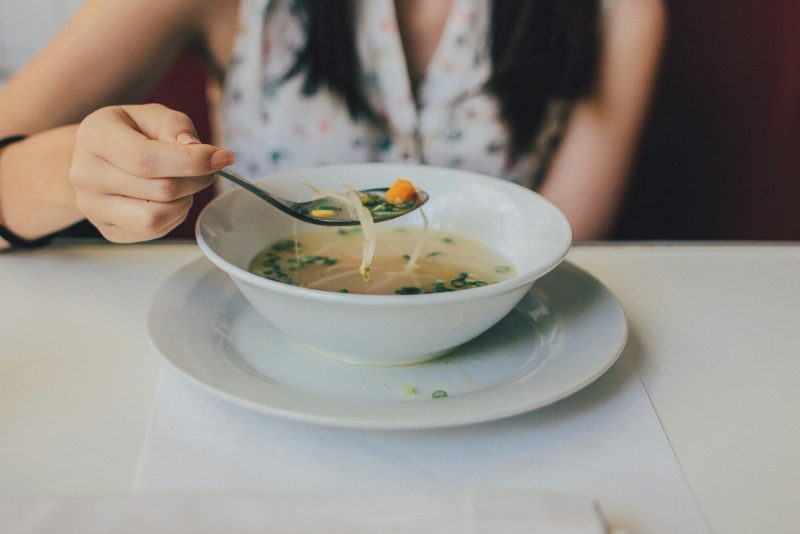
Your friend has the flu. They text to cancel dinner, apologize unnecessarily, and mention that they haven’t eaten much. Half an hour later, you’re outside their door with soup and the bread they like. They did not ask you yo come. You wanted to make their evening less miserable, and when they settle on the sofa and start eating, you feel pleased.
The impulse to comfort and look after someone is an expression of the CARE emotional network, one of the core emotional systems in your brain. These systems generate feelings and impulses that organize behavior around recurring problems of living. CARE makes another creature’s well-being matter to you and can make attending to it deeply rewarding.
Why evolution made helpless creatures hard to ignore
For mammals, producing offspring is only the beginning of the reproductive problem. A newborn needs food, warmth, and protection, often for a substantial period. An animal that successfully reproduces and then leaves its genetic prospects in the care of someone who cannot hold up their own head is probably not passing their genes far into the future. CARE helps solve that problem by making caregivers responsive to the young and motivated to keep them alive. A parent retrieves a pup that has strayed from the nest, nurses it, and responds to its distress. These activities cost time and energy, sometimes expose the parent to danger, and interrupt other things they could be doing. Nurturant feelings give them compelling reasons to do them anyway [1].
The evolutionary advantage concerns offspring survival. The caregiver’s immediate experience can be tenderness, concern, and satisfaction when the young animal is comfortable again. As with the other emotional systems, the organism does not need to understand the reproductive consequences of its feelings for those feelings to do their work.
In many species, nurturance extends far beyond one’s own offspring. We look after friends, partners, animals, even plants, and people we have never met. The ancient circuitry of parental care is an important foundation for all of these broad forms of affection and concern [1,2].
What CARE feels like
The activation of the CARE system feels like tenderness, affection, and enjoyment in looking after others. You notice that someone is uncomfortable and feel drawn to help. You want to be gentle with a frightened animal. You remember something that would make a difficult day easier for a person you love. Their relief becomes a pleasure of your own [3,4]. Evolution made useful behavior rewarding and enjoying someone else’s comfort is an effective way of becoming interested in providing it.
CARE differs from needing someone to remain close. The PANIC/GRIEF system makes separation painful, while CARE contributes the wish for the other person to be well. In a relationship, normally, both are active at once. You may want to comfort your partner because they are suffering and also fear what their distress means for your relationship. Caring does not reproduce someone else’s feelings inside yourself. You can understand that a friend is devastated without becoming equally devastated.
How the brain turns concern into caregiving
CARE is a network involving hypothalamic and nearby subcortical regions, with an important role for the preoptic area. Disrupting parts of this circuitry can severely impair parental behavior. The network also interacts with the dopamine systems involved in SEEKING, helping turn nurturant motivation into activities such as building a nest and retrieving young [1]. Oxytocin, prolactin, and endogenous opioids contribute to the regulation of caregiving and its rewarding qualities. Their effects depend on the circuits and receptors involved, alongside hormonal state and experience.
The capacities are present in both sexes and repeated exposure to pups encourages caregiving even in animals that initially avoid them. Biology provides a capacity whose expression changes with experience [1]. In human life, you also learn what care looks like, who responds to it, and what happens when you offer or need it. Being looked after can make you more tender. Experiences of rejection or exploitation can make you less prone to express care for others. Childhood trauma can reduce CARE, alongside differences in other emotional systems [5].
The lifelong caretaker
A strongly responsive CARE system can make affection and support rewarding parts of everyday life. You enjoy checking in, providing comfort, and noticing what would help. Stronger caring dispositions are most consistently associated with greater agreeableness and a warmer, more affiliative orientation [4,6]. They are also linked with greater comfort in closeness and stronger parental connectedness and willingness to seek support yourself during difficulty [5,7].
A hyperactivated CARE system, however, means that nurturant feelings are unusually easy to arouse, intense, or difficult to disengage from. You manage appointments, interrupted nights, meals, and paperwork. Someone mentions a problem, and you immediately start making arrangements. You keep attending to their needs after your own capacity has run out. Even when help is neither requested nor useful, leaving the situation alone feels intolerable. You become exhausted because you are providing more care than one person can reasonably sustain. Affection does not manufacture additional hours or replace sleep [8].
In practice, this pattern often involves several emotional systems. Concern may combine with FEAR about what could happen, PANIC/GRIEF about losing the relationship, or learned expectations that you must remain useful to remain welcome. Stronger CARE tendencies are associated with both comfort in closeness and anxiety about rejection. Caring is not exclusively linked to secure relationships [5].
The distinction between concern and personal distress helps explain why some people can respond warmly while others become overwhelmed. Concern keeps the other person’s experience in view. Personal distress makes their suffering so uncomfortable for you that stopping the discomfort becomes urgent because of yourself. This self-focused distress is linked with depression and anxiety, whereas other-focused empathic concern does not show the same associations [9]. You may begin interrupting someone’s grief with reassurance because you cannot bear hearing it. You may take over a task because watching them struggle makes you anxious. Your wish to help can be sincere, but your response leaves little room for what they actually want and need. Some broader emotional profiles combining strong CARE tendencies with intense negative emotions also show poorer regulation and difficulty distinguishing one’s own emotions from those of others [10]. Feeling more doesn’t always means caring better.
The strength of the feeling does also not tell us how skillfully someone responds. You can be full of concern and misunderstand what another person needs. You can offer advice when they want company, insist on helping with something they can manage, or become so invested in their recovery that they have to reassure you about it. Nurturant motivation gives you a reason to pay attention. You still have to learn whom you are paying attention to.
What if you don’t really care so much?
A relatively underactive CARE system would mean less spontaneous nurturance and less pleasure in looking after others. You may recognize that someone needs comfort without feeling much impulse to provide it. Affectionate gestures occur to you less often, and another person’s vulnerability may register as information without producing a strong emotional response. Weaker CARE tendencies are connected with less warmth and affiliation, including lower agreeableness [4,11,12]. In everyday relationships, the cost may be that people experience you as uninterested in their comfort. They have to ask explicitly for things that others offer spontaneously, or gradually stop approaching you when they are distressed.
But limited nurturant feeling does not prevent considerate behavior. Empathy and prosocial action are related only moderately, and people can help through commitments, principles, and reasoning as well as emotional motivation [13,14]. You can remember that your partner has a difficult appointment and arrange to accompany them even if an urge to comfort does not sweep you off your feet. Reduced CARE also has no single clinical meaning. In can also stem from very different sources, like a lifelong lack of nurturant interest, a recent loss of tenderness, or simply exhaustion after years of caregiving [15,16].
What kind of caring serves the life you want?
CARE evolved because vulnerable offspring need someone to keep attending to them. In adult life, its feelings make relationships affectionate and mutually sustaining. It keeps communities, societies, and symbiotic partnerships together. Bit they can also keep you attending to someone long after the arrangement has become damaging. Feeling tenderness toward a person does not settle how much access they should have to your time or what responsibilities you should assume. You may provide what others need, love looking after them while becoming the only person whose comfort is treated as optional.
In psychoanalysis, we explore how arrangement like that come into existence and whether they should continue. Perhaps you learned to notice everyone’s needs before they became angry or being useful was the most reliable way to receive affection. And now you feel strangely insecure when nobody needs anything. Or tenderness itself may be difficult: you learned to associate dependence with humiliation and keep your distance whenever someone becomes vulnerable, including you. The work concerns what you can feel, what you expect, and what you do with those feelings. You may need more access to affection, more freedom to refuse a demand, or the ability to accept care without immediately repaying it.
You can still enjoy bringing your friend soup because you want to make their evening better.
References
[1] Panksepp, J., & Biven, L. (2012). The archaeology of mind: Neuroevolutionary origins of human emotions. W. W. Norton & Company.
[2] Davis, K. L., & Panksepp, J. (2018). The emotional foundations of personality: A neurobiological and evolutionary approach. W. W. Norton & Company.
[3] Pedersen, G., Selsbakk, J. M., Theresa, W., & Sigmund, K. (2014). Testing different versions of the Affective Neuroscience Personality Scales in a clinical sample. PLOS ONE, 9(10), Article e109394. https://doi.org/10.1371/journal.pone.0109394
[4] Deak, A., Inhof, O., Nagy, L., & Csokasi, K. (2024). Affective super-traits and/or individual patterns: A variable-centered and a person-centered approach of primary emotional aspects of personality. Scientific Reports, 14, Article 4787. https://doi.org/10.1038/s41598-024-55371-4
[5] Fuchshuber, J., Hiebler-Ragger, M., Kresse, A., Kapfhammer, H.-P., & Unterrainer, H. F. (2019). The influence of attachment styles and personality organization on emotional functioning after childhood trauma. Frontiers in Psychiatry, 10, Article 643. https://doi.org/10.3389/fpsyt.2019.00643
[6] Marengo, D., Davis, K. L., Gradwohl, G. Ö., & Montag, C. (2021). A meta-analysis on individual differences in primary emotional systems and Big Five personality traits. Scientific Reports, 11, Article 7453. https://doi.org/10.1038/s41598-021-84366-8
[7] Glavač, T., & Zupančič, M. (2026). The role of primary emotions in separation-individuation during emerging adulthood. Frontiers in Psychology, 17, Article 1675495. https://doi.org/10.3389/fpsyg.2026.1675495
[8] Luchetti, M., Terracciano, A., Stephan, Y., Aschwanden, D., & Sutin, A. R. (2021). Personality and psychological health in caregivers of older relatives: A case-control study. Aging & Mental Health, 25(9), 1692–1700. https://doi.org/10.1080/13607863.2020.1758907
[9] Hülsemann, M. J., Kaurin, A., Kollmann, B., Chmitorz, A., Ahrens, K. F., Schenk, C., Plichta, M. M., Lutz, B., Basten, U., Fiebach, C. J., Kalisch, R., Lieb, K., Reif, A., Tüscher, O., Hermes, H., Schunk, D., & Wessa, M. (2025). Self-oriented affective empathy is associated with increased negative affect. Scientific Reports, 15, Article 27767. https://doi.org/10.1038/s41598-025-09860-9
[1] Orri, M., Pingault, J.-B., Rouquette, A., Lalanne, C., Falissard, B., Herba, C., Côté, S. M., & Berthoz, S. (2017). Identifying affective personality profiles: A latent profile analysis of the Affective Neuroscience Personality Scales. Scientific Reports, 7, Article 4548. https://doi.org/10.1038/s41598-017-04738-x
[1] Pascazio, L., Bembich, S., Nardone, I. B., Vecchiet, C., Guarino, G., & Clarici, A. (2015). Validation of the Italian translation of the Affective Neuroscience Personality Scales. Psychological Reports, 116(1), 97–115. https://doi.org/10.2466/08.09.PR0.116k13w4
Davis, K. L., & Montag, C. (2019). Selected principles of Pankseppian affective neuroscience. Frontiers in Neuroscience, 12, Article 1025. https://doi.org/10.3389/fnins.2018.01025
Yin, Y., & Wang, Y. (2023). Is empathy associated with more prosocial behaviour? A meta-analysis. Asian Journal of Social Psychology, 26(1), 3–22. https://doi.org/10.1111/ajsp.12537
Guo, R., Guo, Z., Su, Y., & Wu, Z. (2026). Affect as compensation: Self-emotions facilitate low-empathy individuals’ prosocial behavior. Journal of Pacific Rim Psychology, 20, Article 18344909261416065. https://doi.org/10.1177/18344909261416065
Cupellaro, S., Colonnello, V., Sabatello, U., Ubertini, C., & Sogos, C. (2025). Affective Neuroscience Personality Scale (ANPS) in children with internalizing disorders. Pediatric Reports, 17(3), Article 55. https://doi.org/10.3390/pediatric17030055
Montag, C., Widenhorn-Müller, K., Panksepp, J., & Kiefer, M. (2017). Individual differences in Affective Neuroscience Personality Scale (ANPS) primary emotional traits and depressive tendencies. Comprehensive Psychiatry, 73, 136–142. https://doi.org/10.1016/j.comppsych.2016.11.007