Evolutionary Psychology of Faith: A Survival Feature or a Mind Bug?


If religion were a person, how are things between you two right now? Are you even on speaking terms? Are you just awkwardly tolerating each other at family gatherings, given a polite nod from across the room? Or do you cross to the other side of the street when you see them coming?
Our relationship has moved through distinct eras. When I was younger, I had a more .... let's say fierce attitude. Then, for a time, I mostly just forgot about it, and gradually adopted an open stance of tolerance for the rare moments when I interacted with a religious individual. Things were chill.
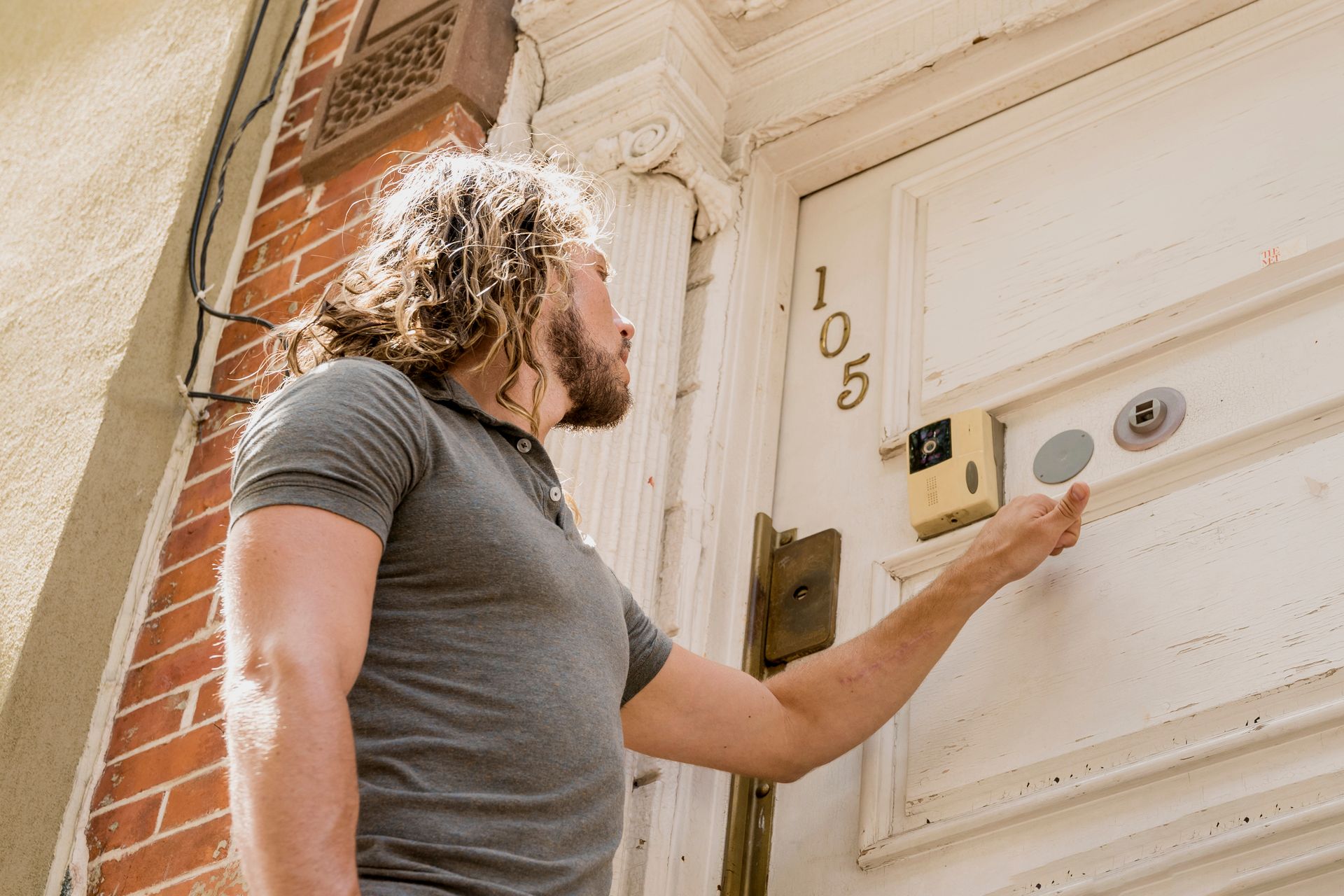
Until last year, when religion crashed into my life like an intense friend from middle school who suddenly moved in next door. You know the type that you hadn't thought about in twenty years, but suddenly they are knocking on your door with beer and wanting to discuss deeply personal stuff when you run into each other in the hallway. You find yourself frantically messaging old classmates to figure out what the cookie's deal is and how to handle their now-constant presence.
Religion ... has many faces. At the individual level, it can offer comfort. It is a ready-made antidote to existential dread. It comes with a community that secures a sense of belonging. Societally, it is the ultimate glue, aligning thousands of strangers under a shared moral canopy and a great potential to mobilize them for common causes. Good or bad causes. Meaning, the shadows are dark. Societally, the exact mechanism that binds an "in-group" together inherently creates an "out-group." The cohesive glue easily hardens into a weapon for tribal conflict, xenophobia, and systemic oppression. On an individual level, it can breed deep-seated shame, massive biases, and the severe suppression of one's real self.
You want to know how a cognitive phenomenon with such volatile, double-edged outcomes evolves in the first place? I got you. Basically, we have two models that explain why all human societies persistently exhibit this trait.
The Evolutionary Advantage or The "It's a Feature" Camp
The first model looks at religion as a straightforward adaptation. It argues that religion evolved because it actively helped humans survive, cooperate, and reproduce.
While Darwin (1871), in The Descent of Man, and even early sociologists like Émile Durkheim (1912), in The Elementary Forms of the Religious Life, theorized the social binding function of religion, the modern evolutionary framework was developed by evolutionary biologist David Sloan Wilson and anthropologist Richard Sosis. in his Darwin's cathedral: Evolution, religion, and the nature of society, Sloan Wilson is focusing on group-level adaptation. Group-level adaptation is the idea that evolution doesn't just reward the fittest selfish individuals, but actually favors entire groups that figure out how to operate together as a single, cooperative unit. Richard Sosis, on the other hand, focuses on costly signaling, which is basically the ultimate lie-detector test for loyalty. It is the idea that making people do difficult, painful, or time-consuming things proves to the rest of the group that they aren't faking their commitment. So basically, Wilson and Sosis argue that religion solves the free-rider problem. What is that?
Humans didn't conquer the planet by being the fastest or the strongest. We rule the world because of our unmatched capacity for teamwork. From Darwin's early notes to modern scholars like Michael Tomasello ("shared intentionality" in Becoming Human: A Theory of Ontogeny), Joseph Henrich ("the collective brain" in The Secret of Our Success: How Culture Is Driving Human Evolution, Domesticating Our Species, and Making Us Smarter), and Brian Hare ("survival of the friendliest" in Survival of the Friendliest: Understanding Our Origins and Rediscovering Our Common Humanity), the scientific consensus is that extreme cooperation is sapiens' ultimate evolutionary superpower. But cooperation is risky. Groups are always vulnerable to "free riders": the guys who happily eat the mammoth meat but conveniently sprain an ankle when it is time to do the actual hunting. Religions solve this.
A shared belief in an all-seeing, punishing deity acts like an invisible police force, keeping antisocial behavior in check even when nobody is looking. On top of that, religion demands "costly signaling." Think of fasting, painful rites, strict dietary laws, or time-consuming prayers. If you are willing to endure all of that, you prove your absolute loyalty to the group. A free rider simply won't pay that high a cost. The result is a highly cohesive, fiercely loyal collective that easily outcompetes fragmented, non-religious groups. Religion, in short, served the host.
Jonathan Haidt, in The Righteous Mind: Why Good People Are Divided by Politics and Religion, expands on this framework by introducing the concept of the "hive switch." He argues that religious rituals, like synchronized chanting or dancing, temporarily shut down the annoying, self-serving ego. They allow individuals to merge seamlessly into a larger collective organism, vastly improving the group's chances of survival. Additionally, Ara Norenzayan, in Big Gods: How Religion Transformed Cooperation and Conflict, developed the "big gods" variant. He theorizes that as human settlements grew from small bands into large agricultural societies, kin-based trust broke down. You cannot personally know everyone in a city. Belief in "big gods", omniscient, moralizing deities, was the necessary evolutionary bridge that allowed thousands of anonymous strangers to trust each other and build civilizations.

Belief in "big gods", omniscient, moralizing deities, was the necessary evolutionary bridge that allowed thousands of anonymous strangers to trust each other and build civilizations. It all sounds incredibly elegant, doesn't it? Like religion is the ultimate evolutionary lifehack for building societies. But there is a second camp of thinkers who look at this exact same phenomenon and see something different. What if we are giving religion way too much credit for being "helpful"? What if it isn't a tool that we use, but a tool that uses us?
The Parasitic Meme or The "It's a Bug" Camp
This model kind of flips the script. It argues that religion is a byproduct of human cognitive workings. It acts as a cultural parasite. In this view, religion does not exist to serve the human host; it exists solely to replicate itself.
To understand this, you have to look at ideas as replicators: memes. Before the internet hijacked the word, a meme was originally defined as the cultural equivalent of a gene. It is a unit of information—like a fashion trend or a religious concept—that spreads from brain to brain.
Just like genes, memes mutate, compete for survival, and replicate. Think of a juicy piece of gossip. Someone tells a story, and as it spreads from person to person, people instinctively embellish the details to make it just a little spicier. That is memetic mutation. Eventually, the most shocking, dramatic version of the rumor grabs everyone's attention, completely crowding out the boring truth. That is memetic competition. And because the new, embellished story is now so incredibly scandalous, you simply cannot resist passing it on to your friends. That is replication.

But why are some ideas so incredibly sticky? Why did you instantly forget a math formula, but remember your friend's phone number from the 90s to this day? Because the most successful memes survive by actively hacking your deepest evolutionary hardware. Think about an outrageous clickbait headline, or one of those old chain letters that threatened you with bad luck if you didn't forward it. These ideas survive because they hijack your primal instincts, like your need for connection, your deep-seated fear of danger, your desire for social status, or your tribal outrage. A meme does not care if it is factually true, and it certainly does not care if it is good for your mental health. It only cares about being copied. By triggering your highest-arousal emotions, it turns your own biology into its personal copying machine.
Who came up with the concept, by the way? Dawkins, of course. He coined the term "meme" in 1976, and in 1993 he explicitly formalized the parasitic framework in his essay Viruses of the Mind. He explained that just as a biological virus latches onto a vulnerable cell, a mind virus exploits a vulnerable brain. And religion is a highly contagious "memeplex": a clustered group of cooperative memes that hijacks your pre-existing cognitive hardware.
Think of, for example, the survival mechanisms of a human child. Children evolved a necessary cognitive trait: absolute, unquestioning trust in authority figures. If a parent tells a toddler, "Don't eat those red berries; they are poisonous," a kid who demands proof probably won't survive the afternoon. We are biologically hardwired to absorb warnings from authorities as absolute truth. The religious memeplex sneaks right through this open door. The meme "believe in this specific God or you will burn in hell" hijacks the exact same survival hardware as "don't eat these berries".

But a successful virus doesn't just infect; it protects itself. The religious memeplex bundles itself with brilliant, built-in defense memes. One meme says, "Faith without evidence is the highest virtue." Another meme says, "Doubt is a punishable sin." A third meme says, "You must convert others to save them." Together, these ideas act like a highly evolved virus. They hijack human psychology to aggressively ensure their own survival and transmission, sometimes actively harming the host's actual biological fitness in the process, like demanding lifelong celibacy or encouraging martyrdom.
In Breaking the Spell, Daniel Dennett elaborates the idea of "domestication." He argues that early animistic beliefs were "wild" memes. Over time, human institutions domesticated these memes, engineering organized religions that act like highly evolved viruses, complete with sophisticated defense mechanisms against skepticism. In The Meme Machine, Susan Blackmore focused on how the religious memeplex uses psychological immune-system overrides. She highlighted how religious memes bundle themselves with instructions that actively forbid questioning, think of maxims like "faith is a virtue" or "doubt is a sin." This ensures the parasite is hardly eradicated by rational thought.

The Verdict: A Feature, a Bug, or Both?
The reality is, biology is rarely neat and tidy. These two models don't necessarily have to cancel each other out. It's very possible that faith started out as a crucial evolutionary feature, the social glue that allowed our ancestors to survive, cooperate, and build cities. But once that cognitive infrastructure was in place, it became the perfect, warm host environment for parasitic memes to move in, mutate, and take over.
We are walking around with ancient brains running legacy software. Whether it's a brilliant survival tool that outlived its original purpose or a mind virus that hacked our childhood trust, the result is the same: the religious memeplex is deeply embedded in the human operating system.
So, knowing what you know now, what will be your play in the future? How will you handle the religious memeplex when it shows up on your front porch? Will you lean into pure tolerance, accepting it as an inevitable, perhaps even useful, quirk of human nature? Roll your eyes and dismiss it? Or will you go on the offensive and actively dismantle the dogma wherever you see it?

References
- Blackmore, S. (1999). The meme machine. Oxford University Press.
- Darwin, C. (1871). The descent of man, and selection in relation to sex. John Murray.
- Dawkins, R. (1976). The selfish gene. Oxford University Press.
- Dawkins, R. (1993). Viruses of the mind. In B. Dahlbom (Ed.), Dennett and his critics: Demystifying mind (pp. 13–27). Blackwell.
- Dennett, D. C. (2006). Breaking the spell: Religion as a natural phenomenon. Viking Penguin.
- Durkheim, E. (1912). The elementary forms of the religious life. J. W. Swain, Trans.
- Haidt, J. (2012). The righteous mind: Why good people are divided by politics and religion. Pantheon Books.
- Harari, Y. N. (2014). Sapiens: A brief history of humankind. Harvill Secker.
- Hare, B., & Woods, V. (2020). Survival of the friendliest: Understanding our origins and rediscovering our common humanity. Random House.
- Henrich, J. (2015). The secret of our success: How culture is driving human evolution, domesticating our species, and making us smarter. Princeton University Press.
- Hrdy, S. B. (2009). Mothers and others: The evolutionary origins of mutual understanding. Harvard University Press.
- Norenzayan, A. (2013). Big gods: How religion transformed cooperation and conflict. Princeton University Press.
- Sosis, R. (2004). The adaptive value of religious ritual. American Scientist, 92(2), 166–172.
- Tomasello, M. (2009). Why we cooperate. MIT Press.
- Wilson, D. S. (2002). Darwin's cathedral: Evolution, religion, and the nature of society. University of Chicago Press.